Skip to content

If you manage procurement or product development for a growing brand, your inbox is likely a mess of overlapping threads. You have your graphic designer asking for die-lines, a factory overseas asking for color approvals, and a freight forwarder telling you a shipment is delayed.
When packaging is treated as a series of disconnected steps handled by different vendors, the brand absorbs all the risk. If a box arrives crushed, the manufacturer blames the logistics team, the logistics team blames the structural designer, and you are left paying for the reprint.
This is exactly the problem a one-stop packaging solution is designed to solve.
If you are still comparing whether to manage suppliers separately or consolidate the workflow, it helps to first understand how custom packaging design and manufacturing connects structure, materials, sampling, production, and logistics.
This video summarizes the key ideas from the full article and can be watched as an educational guide or listened to like a podcast for a quick overview.
What Is a One-Stop Packaging Solution?
A one-stop packaging solution is a service model where a single manufacturing partner handles the entire lifecycle of your packaging—from structural engineering, material sourcing, and graphic design to mass production, quality control, and global logistics.
Instead of acting as a general contractor managing five different companies, you hire one partner. That partner is entirely responsible for getting the final, quality-checked box to your warehouse on time.
This is different from packaging outsourcing, which often refers to packing, labeling, kitting, or fulfillment tasks after the product is already produced.
What a One-Stop Packaging Solution Is Not
A one-stop packaging solution is not the same as contract packaging or co-packing. Contract packaging usually focuses on packing, labeling, kitting, or fulfillment tasks after the product is already made. A one-stop custom packaging partner focuses on developing and manufacturing the packaging itself, including structure, materials, dielines, sampling, production, QC, and logistics.
It is also not the same as working with a broker. A broker may coordinate factories, but may not control engineering, production standards, material decisions, or quality risk directly.
Why Brands Are Consolidating Packaging Suppliers
Moving from a fragmented supply chain to a single partner isn’t just about convenience. It fundamentally changes how a business operates.
Single Source of Accountability
When you use a turnkey provider, finger-pointing disappears. If the insert doesn’t fit the product securely, or the foil stamping flakes off, it is the sole responsibility of your packaging partner to fix it. They own the entire outcome.
Accelerated Speed-to-Market
Every time you hand a project off from one vendor to another (e.g., from an independent designer to a factory), you lose days or weeks to communication gaps and file formatting issues. A unified team works in parallel. The engineers design the box knowing exactly what the factory’s machines can handle, eliminating the need for endless revisions.
Cost Efficiency Through Scale
Managing multiple vendors means paying multiple markups. Consolidating your spending with one partner usually unlocks better volume pricing, reduces shipping costs between intermediate facilities, and drastically cuts the internal administrative hours spent managing invoices.
Fragmented vs. One-Stop Procurement
| Feature | Fragmented Supply Chain | One-Stop Solution |
| Vendor Management | High (Managing 3-5 different companies) | Low (1 dedicated account manager) |
| Quality Control | Reactive (Discovered upon final delivery) | Proactive (Monitored throughout production) |
| Accountability | Low (Vendors blame each other for errors) | High (Sole responsibility) |
| Lead Times | Often delayed by vendor hand-offs | Streamlined and predictable |
The Standard Turnkey Packaging Process
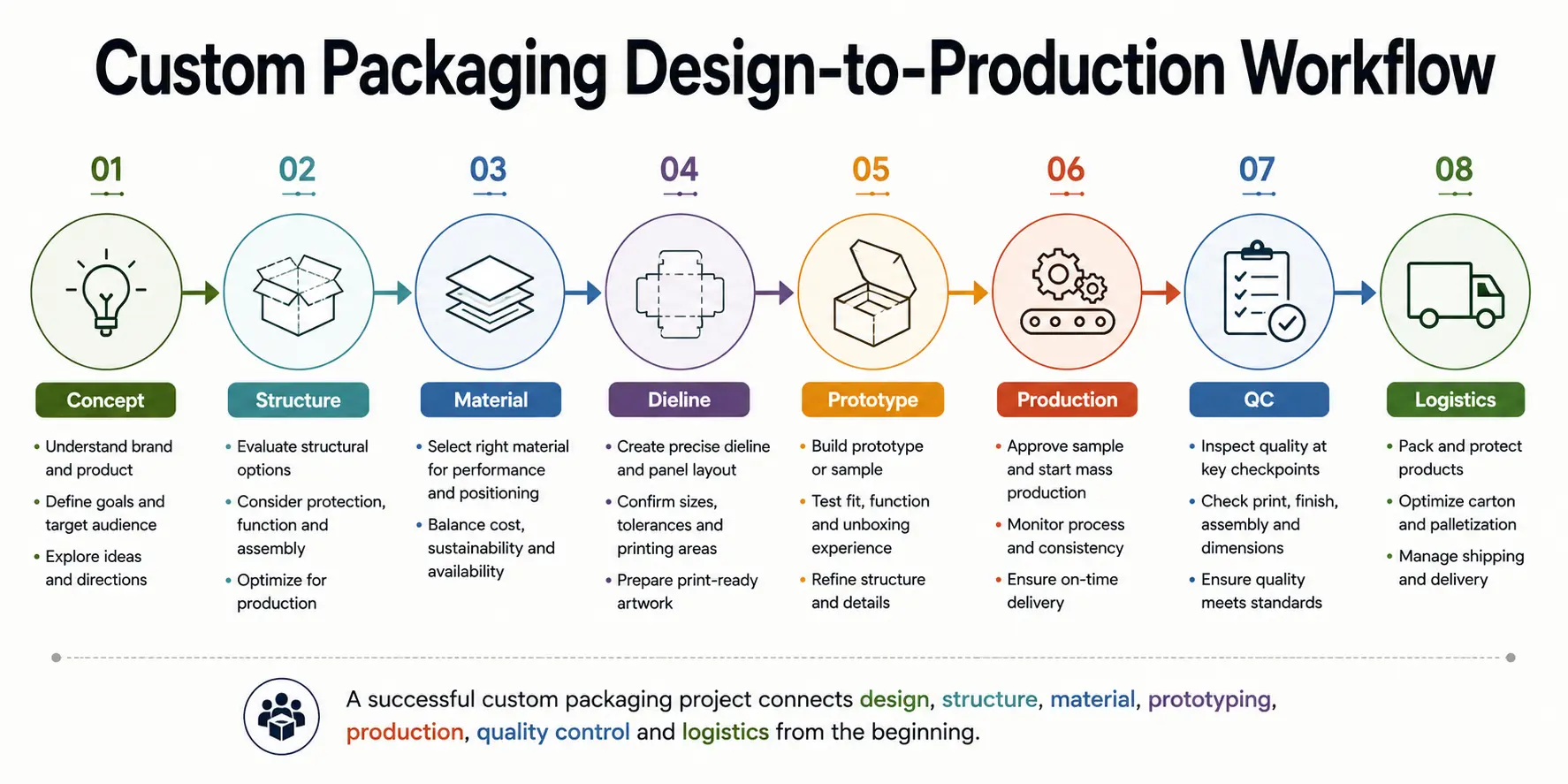
What exactly happens when you hire a full-service packaging company? While every project is unique, a mature supplier will guide you through a standardized workflow:
- Consultation and Structural Engineering: The partner analyzes your product’s dimensions, weight, fragility, and retail environment. They create a structural design (the die-line) that protects the product while minimizing material waste.
- Prototyping and Material Selection: You receive a blank physical sample to test the fit and feel. At this stage, the partner advises on paper weights, corrugated board grades, or sustainable alternatives. For a deeper checklist, see our packaging sampling guide before approving any sample for production.
- Graphic Application and Pre-Press: Your artwork is applied to the die-line. The partner ensures colors are calibrated for the specific printing presses that will be used. If your design team is preparing artwork, make sure they understand the role of a packaging dieline before applying graphics to the flat template.
- Mass Production and QC: The packaging is printed, cut, glued, and assembled. A dedicated quality control team inspects the run for color consistency, structural integrity, and finishing defects. Print quality also depends on selecting the right packaging printing techniques for the material, order quantity, and finishing effect.
- Logistics and Fulfillment: The final goods are flat-packed or fully assembled and shipped directly to your fulfillment center or manufacturer.
When Does a Brand Need a One-Stop Packaging Partner?
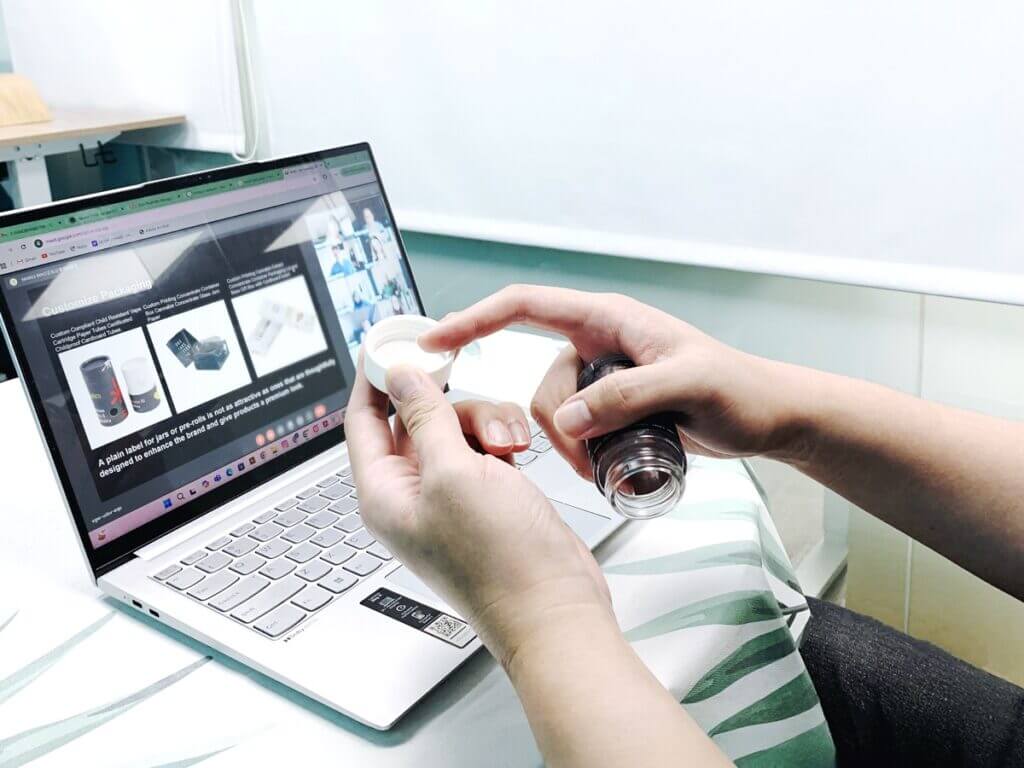
A one-stop packaging model is especially useful when the project involves custom structure, multiple packaging components, overseas production, tight launch timelines, premium finishes, e-commerce shipping protection, or several vendors that need to coordinate with each other.
It may be less necessary for very simple reorder projects using standard packaging with no design, structural, or logistics complexity.
How to Evaluate a One Stop Packaging Partner
Not every company claiming to be “one-stop” actually is. Many are simply brokers who take your order and outsource the work to the cheapest factories they can find, marking up the price along the way.
Use this checklist to evaluate a potential partner:
- Do they have in-house structural engineers? (If they only have graphic designers, they cannot optimize your packaging for safety and shipping costs).
- Can they provide physical prototypes before mass production?
- Where are their manufacturing facilities located?
- What is their process for color management and quality control?
- Do they handle customs clearance and freight forwarding?
If you are comparing suppliers, ask whether they can explain machine production, hand assembly, material risk, QC, and logistics impact—not just quote a low unit price. This is also why a transparent custom packaging quote from overseas suppliers should include more than unit cost.
“Many brands assume that cutting packaging costs means using cheaper, lower-quality materials. In reality, the most significant savings come from smart structural engineering and precise material tolerances.
Take our work with the leading U.S. cannabis brand STIIIZY, for example. They were originally using a robust but expensive two-piece rigid box. Instead of compromising their premium image to save a few cents, we re-engineered the structure entirely. We replaced the rigid lid with a sleek paper sleeve and designed a hidden ‘buffer bump’ to secure the inner tray.
To make this work, calculating the exact material tolerances was critical. If the sleeve was a millimeter too tight, it would slow down manual assembly; if it was too loose, the product would fall out. By conducting rigorous in-house testing and paper thickness calibrations, we dialed in the exact measurements to maintain a high-end, friction-fit unboxing experience. This precise structural shift simplified the assembly line and ultimately reduced STIIIZY’s overall packaging costs by 20%.“
— INNORHINO Structural Engineering Team
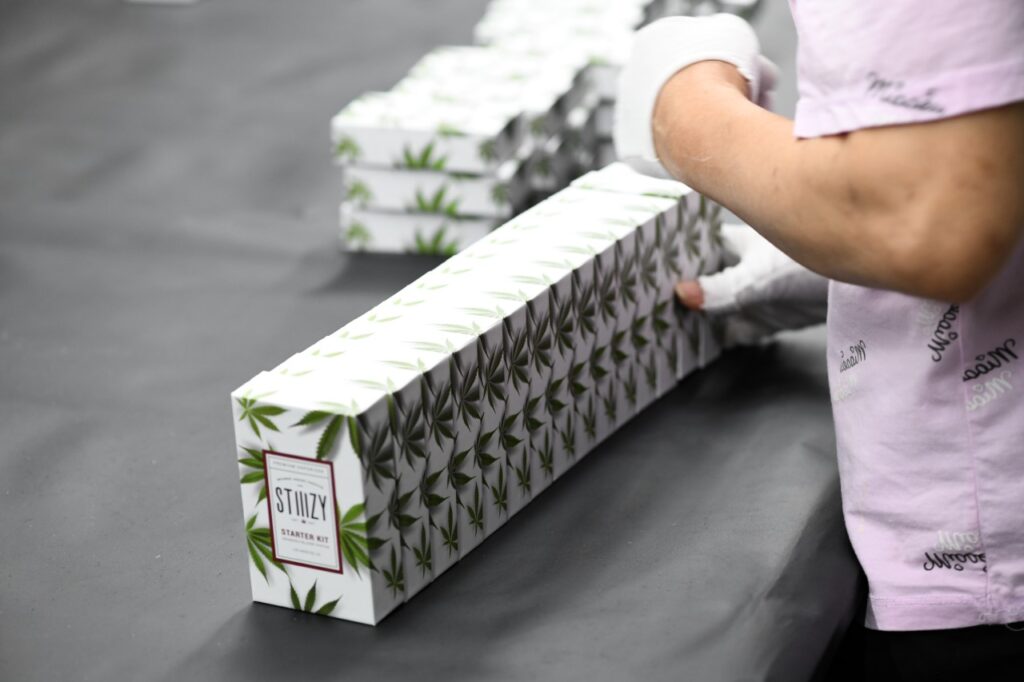
💡 Dive Deeper: Read the full STIIIZY case study to see how our one-stop engineering approach drove 20% cost savings.
3 Common Mistakes When Switching to a Single Supplier
If you are transitioning to a consolidated model, watch out for these pitfalls:
- Skipping the prototype phase: Never approve mass production based solely on a 3D digital render. Always demand a physical, unprinted structural sample to test with your actual product. This is one of the most common packaging sampling mistakes brands make before mass production.
- Choosing based on unit price alone: A broker might offer a lower price per box, but if their defect rate is 10% and they offer no logistics support, your total landed cost will be much higher.
- Bringing packaging in too late: Brands often finalize their product and only think about the box weeks before launch. Engage your packaging partner during product development to ensure you aren’t forced into expensive, oversized custom boxes.
How INNORHINO Simplifies the Packaging Supply Chain
At INNORHINO, we built our infrastructure to take the friction out of packaging procurement. We are not a middleman; we are a dedicated partner offering true end-to-end capabilities.
We bridge the gap between creative design and manufacturing reality. Because our structural engineers and production teams work under the same umbrella, we design packaging that looks beautiful on the shelf but is also highly efficient to manufacture, assemble, and ship.
For projects that require structure, material, artwork, sampling, production, and logistics to work together, our packaging design and engineering support helps turn packaging ideas into production-ready solutions.
Whether you are finalizing a dieline or preparing for your first prototype, get the tools you need to succeed. Download The Packaging Engineering Blueprint for actionable decision matrices, cost-trap warnings, and supplier evaluation checklists.
Frequently Asked Questions (FAQ)
Does a one-stop solution cost more than managing it myself?
Can I use my own graphic designer?
What is the minimum order quantity (MOQ) for custom packaging?
Ready to Streamline Your Packaging?
If your packaging project involves design, structure, sampling, production, and logistics, you do not have to manage every handoff alone. Share your product details, launch timeline, and packaging goals with our team. We can help you review the right structure, material, production route, and sourcing plan before the project becomes expensive to change.
Transitioning to a unified workflow is the most effective way to eliminate supply chain friction and protect your bottom line. By partnering with a single provider, you replace a chaotic network of vendors with a streamlined, reliable system. A true one-stop packaging solution does more than just manufacture boxes; it aligns your design, engineering, and logistics under one roof to guarantee quality. If you are ready to scale your brand without the operational headaches, adopting a one-stop packaging solution is the ultimate strategic upgrade. Contact our team today to see how our comprehensive one-stop packaging solution can optimize your next production run.
For a broader look at the industrial standards governing this process, you can read more about the history of packaging and labeling on Wikipedia.