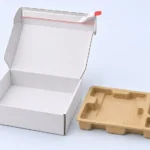
Should a premium brand invest in highly tactile packaging instead of a conventional paperboard or plastic system?
Only when the tactile feature does a measurable commercial job: supporting a higher price tier, replacing another packaging component, or earning refill purchases. It must also hold up at realistic volumes once tooling, yield, freight and assembly are counted. If the business case rests on tactility alone, treat it as a finish decision rather than a platform change.
The case is strongest for products with healthy margins, a stable design life and a physical interaction customers notice on every use. It is weakest for short-lived SKUs, volatile volumes or packs thrown away on day one. The trade-off is stronger differentiation against higher fixed costs, a narrower manufacturing window and, for metal, more shipping mass. Before releasing production tooling, build a volume-sensitive total cost of ownership (TCO) model and prototype the critical tactile feature. Then test it in the real distribution channel, and model any reuse claim at refill rates you can observe.
Market assumption: this article covers products placed on the EU market, where PPWR applies. Local producer-responsibility rules and fees still need country-specific verification.
Why Premium Tactile Packaging Changes the Cost Structure
Most premium packaging still competes on the visual surface: color, print, foil, varnish and graphic hierarchy. Structural tactility moves differentiation into the object itself. It shapes what happens when a customer lifts, opens, closes, grips or keeps the package. That can pay off commercially, and it moves cost into places a print upgrade never touches.
A heavier compact signals permanence, but it adds material and freight cost to every unit. A contoured fiber shell can replace conventional boxboard. In exchange, it raises new tooling, forming, moisture and dimensional-control questions. A refillable case spreads the impact of durable hardware across many purchases, but only if customers come back to refill it.
Two well-documented packages show opposite routes. One takes material out. The other builds a durable object worth keeping.
Ruinart Second Skin: lighter material, molded form

Material-reduction route — Ruinart Second Skin
The tactile identity comes from molded form, fiber texture and close bottle fit.
Ruinart introduced its Second Skin case in 2020. It replaced the individual gift boxes on Blanc de Blancs and Rosé. The brand describes it as a recyclable case of 99% paper, molded to the shape of the bottle.
By Ruinart’s own figures, the case weighs 40 g, against 355 g for the previous gift box. Its packaging carbon footprint is about 60% lower under the French BEE/ADEME methodology. Ruinart also notes the case is produced without air freight, which contributes to that result.
These numbers compare Second Skin with Ruinart’s own predecessor box. They say nothing general about molded fiber as a material. The useful lesson is narrower: a brand can gain sensory differentiation and material reduction together when the new structure replaces a heavier system. Adding it on top of the old one does not deliver the same result.
The development path matters as much as the result. The project took about two years of R&D and several rounds of prototypes. Paper specialist James Cropper and converter Pusterla 1880 reworked the design along the way. Before borrowing lessons from Second Skin, establish the same facts for your own project: fiber formulation, forming method, tooling architecture, surface definition and converting sequence.
Kjaer Weis Iconic Edition: a durable metal case built for refills

Durable-object route — Kjaer Weis Iconic Edition
The tactile identity comes from mass, a metal surface and repeated interaction with a retained case.
Kjaer Weis goes the other way. Its Iconic Edition compacts were developed with French designer Marc Atlan. They are made from Zamac, a zinc alloy with aluminum, magnesium and copper. Weight, metal surface and the closing action are part of the product’s identity.
Refill pans are sold separately and pressed into the case. The customer keeps the case and replaces only the consumable.
Material reduction is not the mechanism here. The commercial and environmental case depends on customers keeping the case and buying refills. The brand hedges this itself. Alongside the metal case, it sells a lightweight paper Red Edition designed to be refilled up to three times.
That changes the question. Comparing the weight of metal with plastic misses the point. The real question is whether keeping a durable component pays off across the purchases a real customer makes, both economically and over its lifecycle. Without measured refill behavior, the answer remains a scenario.
Decision Matrix: Conventional, Molded Fiber or Refillable Metal
| Evaluation factor | Conventional premium paperboard / plastic | Tactile molded paper or fiber | Durable metal + refill system |
|---|---|---|---|
| Primary value mechanism | Graphics, finishes, familiar opening sequence | Texture, surface relief, structural form, potential material reduction | Mass, temperature, mechanical feel, retained object |
| Fixed-cost exposure | Process-dependent; conventional tooling is usually easier to source and change | Custom forming tools and process development can raise fixed-cost exposure | Custom die-cast tooling, finishing fixtures, inserts and mechanism development can create substantial fixed-cost exposure |
| Ramp-up risk | Supported by mature converting processes | Surface definition, fiber distribution, dimensional consistency and moisture behavior can affect yield | Casting variation, finish build-up, warpage and mating-part fit can affect feel and assembly |
| Assembly effect | Usually compatible with established packing equipment | Verify nesting, denesting, closure behavior and packing-line handling | Multiple components and refill architecture add assembly and inventory steps |
| Logistics effect | Depends on flat-packability and cube | Low mass helps, but formed parts can take more inbound cube | High mass raises parcel and air-freight cost even when the pack is small |
| Sustainability question | Material composition, recyclability, recycled content, right-sizing | Verify actual composition and recycling route; do not assume compostability or an EPR advantage | Model the durable case across observed reuse cycles; verify component separation and end-of-life route |
| Critical commercial test | Does the added finishing create enough perceived value for its cost? | Can structural tactility replace packaging, rather than add to it? | Will enough customers keep the case and buy refills? |
The matrix leaves out blanket claims such as “high tooling cost” or “very high unit cost.” Those outcomes depend on many variables: package dimensions, process, cavity count, finish specification, supplier location, lifetime volume and required automation.
Where the Trade-offs Show Up Downstream

Molded fiber: tactile definition vs. forming stability
A molded fiber or paper structure lets the material itself carry the design language. Surface relief, fiber texture, edge geometry and a close fit to the product all do visual work. That can reduce dependence on laminated board, plastic inserts, decorative films or heavy print treatments.
A three-dimensional form also brings process constraints that a printed flat sheet never faces. High relief, tight radii, steep transitions, thin local sections and complex release geometry all challenge fiber distribution and part consistency. The practical limits depend on the supplier and the geometry. Setting a universal embossing depth or wall-thickness rule before trials would be false precision.
Yield is the first downstream risk. A feature can look excellent on a prototype and still fail at scale. Unstable release, damaged edges, dimensional drift or higher rejection can wipe out a unit quotation that looked acceptable.
Moisture is the second. Cellulosic materials change physical properties with temperature and humidity. That is why ASTM D4332 covers conditioning packages and components under controlled atmospheres before testing. ASTM D4169 then provides a framework for evaluating shipping units against distribution hazards.
Neither standard is a pass/fail bar every molded fiber pack must clear. Build the test program around the actual product mass, channel, unitization, parcel environment, climate exposure and likely failure modes.
Decision implication: approve the manufacturing window, not a presentation sample. Agree on limits for relief definition, dimensional range, moisture-conditioned performance, cosmetic defects and production yield.
Metal refill systems: tactile precision vs. lifetime economics
Zamac suits applications where density, surface finish and rigid mechanical interaction are part of the intended experience. Calling a metal pack premium settles none of the engineering, though.
A compact that slides, rotates, snaps, closes magnetically or relies on an interference fit is a tolerance stack. Casting variation, secondary machining, plating or coating thickness, insert dimensions and assembly alignment all feed into it. The customer feels the result as opening force, looseness, noise and perceived quality.
Tighter tolerances can improve repeatability. They also raise tooling, inspection, machining and rejection costs. A universal ±0.05 mm requirement belongs in the brief only if a tolerance analysis and the supplier’s process capability support it. The right specification is the widest tolerance band that still delivers the tactile response you want, every time.
The second effect is economic. Case mass drives freight and initial unit cost. Those costs set how many refills it takes to break even.
Avoid declaring that three, five or ten refills are needed. Model the system at one initial purchase and at several plausible repeat-purchase levels instead. Use real package mass, production data, freight lanes and retention assumptions. If the story only works at a refill rate the business has no evidence it can reach, that assumption belongs in the risk register.
EU PPWR: document the design, not the material label
Regulation (EU) 2025/40, the Packaging and Packaging Waste Regulation (PPWR), entered into force on February 11, 2025. It has applied since August 12, 2026, and several design requirements phase in later.
Article 10 matters most here. By January 1, 2030, manufacturers and importers must reduce packaging weight and volume to the minimum needed for functionality, taking shape and material into account. They must also be able to document that assessment.
For tactile premium packaging, the burden shifts to documentation. A heavy component is not banned outright, and a paper component is not compliant by default. Either way, the manufacturer has to explain why its material, weight, volume and structural features are necessary for the pack’s functions.
PPWR also sets recyclability performance requirements. It provides for EPR fees to be modulated by recyclability grade as implementing rules take effect. That still does not support a blanket claim that molded paper will carry a lower EPR fee than metal. Actual fees depend on the packaging category, the recyclability assessment and each Member State’s implementation.
Reusable packaging has its own conditions under Article 11. Among them, the pack must be designed for multiple reuse and able to complete repeated rotations under normally foreseeable conditions. Whether a consumer-retained cosmetic compact and its refill system meet each provision needs a case-specific assessment. The word “refillable” on its own proves nothing.
In practice, choose materials on evidence. Document the pack architecture, intended use, collection or reuse pathway, and the evidence behind each regulatory requirement you rely on.
LCA: a method is not a result
ISO 14040 sets the principles and framework for life cycle assessment (LCA). ISO 14044 sets requirements for goal and scope, inventory analysis, impact assessment, interpretation and reporting. Neither standard proves that a particular refillable metal pack or molded fiber pack has the lower footprint.
The functional unit and system boundary decide most of the outcome. Compare a single-use pack with a metal case used once, and you get one answer. Spread the same case across repeated refills, and you get a very different one.
Transport mode, pack mass, manufacturing process, recycling assumptions and avoided components can all move the result. Treat the refill rate as a model input you test, rather than a conclusion in your marketing copy.
A Four-Phase Roadmap Before You Release Tooling
Phase 1: Define the job the tactile feature must do
Start with these inputs:
- Target retail tier and gross-margin structure
- Expected lifetime volume and how uncertain it is
- Channel mix: retail, wholesale, D2C, air freight, ocean freight
- Sensory attributes you want: weight, texture, thermal feel, opening force, sound
- Expected design life
- For refill systems: customer retention and repeat-purchase assumptions
Next, tie the tactile feature to a specific commercial function: price architecture, removal of another component, retained reuse or measured customer preference. If you cannot, treat it as a discretionary finish rather than a structural requirement.
Test a lower-complexity route first. Board texture, relief embossing, coatings, insert redesign or controlled mass placement may deliver enough sensory difference. None of them require changing the whole packaging platform.
Phase 2: Model packaging TCO before production tooling
At minimum, a packaging TCO model should cover these costs per sellable unit:
- Conversion cost
- Assembly
- Expected yield loss
- Tooling amortization
- Freight
- Inventory carrying cost
- Quality and rework exposure
- Applicable producer-responsibility cost
Run the model at low, base and high lifetime volumes. For a refillable system, build a separate customer-lifetime model rather than spreading the durable case across an assumed infinite life. Then run sensitivity cases at different numbers of actual refills per retained case.
If the business case collapses under a modest drop in volume or refill rate, the design is commercially fragile. Before locking the platform, consider modular tooling, simpler geometry, regional production, a limited-edition rollout or a lighter material architecture.
Phase 3: Validate the tactile feature as an engineering characteristic
For molded fiber or paper:
- Set acceptable surface-definition limits.
- Trial the critical radii, relief and closure geometry.
- Measure dimensional variation across production-representative samples.
- Condition samples for the relevant humidity and temperature exposure.
- Test the complete shipping unit against the actual distribution risk.
For metal refill systems:
- Build a tolerance stack for every component that affects the mechanism.
- Define opening and closing performance in measurable terms where practical.
- Verify surface finish, plating or coating durability and cosmetic limits.
- Run repeated-use testing at a cycle count that matches the intended service life.
- Validate refill insertion and removal across tolerance extremes.
What you sign off on is the process window. A good prototype only proves the feature is possible.
Phase 4: Classify every claim before launch
Sensory benefits are obvious the moment a sample lands on the table. Manufacturing and lifecycle penalties tend to surface later: during ramp-up, in distribution or in customer use. Before publication or launch, sort each claim into one of four groups:
- Measured: package weight, material composition, supplier process, test results, actual refill rate.
- Expected but untested: likely effects of mass, geometry, tolerance stack, humidity or assembly sequence that still need project-specific testing.
- Scenario: TCO or LCA results built on forecast volume, assumed refill behavior or proposed freight lanes.
- Not yet verified: recyclability pathway, EPR fee level, PPWR interpretation, compostability, recycled content or comparative footprint claims still waiting on evidence.
FAQ
Is molded fiber always more sustainable than a rigid paperboard box?
How many refills does a metal compact need to pay back?
Does PPWR ban heavy premium packaging?
What should we prototype first?
Talk With Us About Your Premium Packaging Architecture
Premium tactile packaging holds up best when the physical experience and the operating model reinforce each other.
If your team is weighing a molded fiber structure, a heavyweight refillable case or another non-standard premium architecture, we can help. Share the product dimensions, expected volume, target markets, channel mix, required sensory attributes and launch timing with INNORHINO.
We can review structural feasibility and identify the tests and supplier data still missing. We can also build tooling-amortization and TCO scenarios and flag which assumptions to validate before production tooling is released.
Talk with us. Let’s shape it together.