Quick Answer
Use shelf ready packaging when the retailer expects products to move from the shipping case to the shelf with minimal handling. Choose retail ready packaging when the case also has to present and sell the product on display. Either way, the format should fit the store operation without adding unnecessary cost or packing complexity.
- Retail fit: Check shelf size, case pack, product access, and retailer requirements.
- Operational fit: Make sure the design works with your packing line and store replenishment process.
- Performance fit: Validate opening, product stability, and distribution protection before production.
What Is Shelf Ready Packaging, and Is It the Same as Retail Ready Packaging?

Shelf ready packaging, or SRP, is secondary packaging designed so products can move into their selling position with minimal in-store handling.
Retail ready packaging, or RRP, is often used in the same way. GS1 describes retail ready packaging as ready-to-sell secondary packaging and also refers to it as shelf ready packaging. In this definition, the outer package can be placed directly onto the shelf without unpacking every inner unit. (GS1)
In actual packaging projects, terminology can vary between retailers and suppliers. Some use RRP as a broad term for packaging designed around retail handling, while SRP is used more specifically for shelf replenishment. The label matters less than the retailer’s current specification.
A PDQ display is also related, but it is not a replacement term for every type of RRP. A PDQ is usually designed to arrive ready for display or require very little setup. A basic shelf tray may qualify as retail ready packaging without functioning as a promotional display.
For a live project, start with the retailer’s requirement rather than trying to force the package into one industry label.
The Five Easies Turn a Packaging Idea Into an Operating Requirement
For corrugated shelf ready packaging, FEFCO uses the “Five Easies” as a practical framework: easy to identify, easy to open, easy to get on shelf, easy to shop, and easy to flatten and recycle. (FEFCO)

That sounds simple. Each point, however, creates a real design question.
| Retail need | What the packaging team needs to check | A common failure |
| Easy to identify | Can staff see the brand, variant, quantity, or other required case information without opening the carton? | Similar SKUs are hard to tell apart in the backroom. |
| Easy to open | Can staff remove the required section cleanly and with the expected tools, or without tools if required? | The tear panel rips unevenly or damages the display tray. |
| Easy to get on shelf | Does the loaded tray fit the shelf and remain stable while being moved? | The case fits in transit but is too deep, tall, or heavy for the assigned shelf. |
| Easy to shop | Can customers see and remove the primary packs without the tray blocking them? | The front wall hides labels or makes the last units difficult to reach. |
| Easy to dispose of | Can store staff flatten or separate the empty pack without unnecessary steps? | Extra components, coatings, or awkward construction make disposal harder. |
The five points should be reviewed together. Improving one can make another worse.
A larger opening can make the product easier to see, for example, but may leave less material to hold the products in place. A very easy tear line may help store staff but create a weak point during distribution.
That is why good shelf ready packaging is usually a balance, not a single feature.
When Does Shelf Ready Packaging Make Commercial Sense?
SRP is often discussed as a way to save labor. That is only part of the business case.
The first question is whether the retailer requires it.
If an RRP format is part of a retailer program, the project may be a condition of doing business with that channel. The decision is then less about whether a new carton produces a direct payback for the brand and more about how to meet the requirement at an acceptable total cost.
If RRP is optional, store activity matters more.
A fast-moving product may be replenished many times across many stores. Reducing the number of handling steps can have meaningful operational value. A slow-moving premium product with only a few units on each shelf may have a very different cost case.
There is another issue brands sometimes miss: the company paying for the package and the company saving labor may not be the same company.
A supplier may absorb the added cost of die-cutting, printing, or a more complex structure. The retailer may receive much of the in-store labor benefit. That does not make SRP a poor choice, but it changes how the business case should be evaluated.
Retail access, merchandising consistency, damage risk, supply terms, store velocity, and packaging cost should be considered together.

Case Pack Has to Work With Shelf Space
A case can be technically “shelf ready” and still create extra work.
Consider a simple example. A shipping case contains 12 units, but the assigned shelf space comfortably holds only eight. Store staff may still need to split the case, find space for the remaining four units, or replenish them later.
The tear-away feature worked. The replenishment system did not.
This is why case quantity should be checked against the actual shelf or planogram before the carton structure is finalized.
Case pack decisions also affect pallet quantity, production runs, inventory handling, and order quantities. Changing the number of units per tray to improve shelf fit can therefore create costs elsewhere.
Retail Ready Packaging Solutions: Choose the Format by Operating Condition
There is no single RRP structure that works for every product.
Retail ready packaging solutions should be selected around how the product is packed, shipped, opened, stocked, and shopped. The box style comes after those conditions are clear.

| RRP format | Works well when | Main trade-off | What to validate |
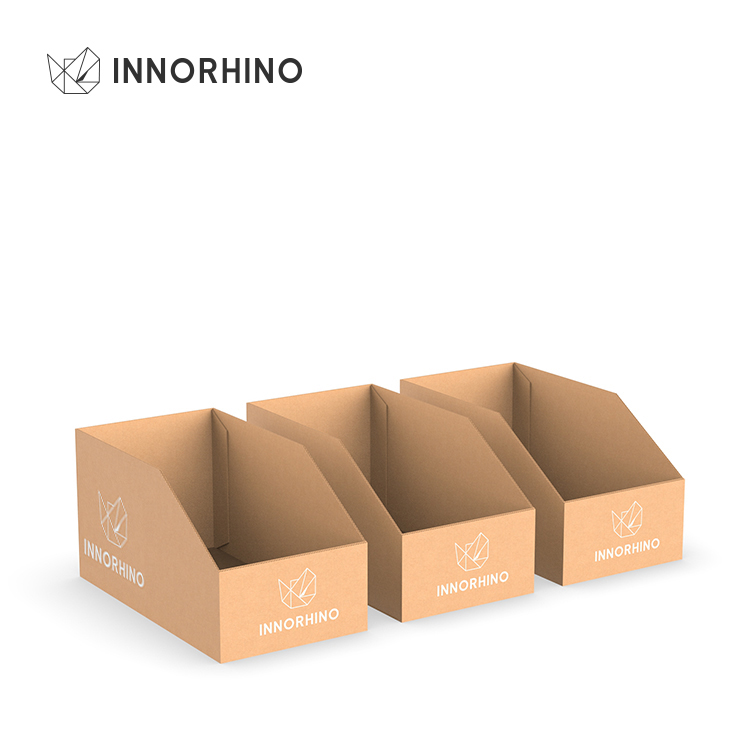
| Tear-away case or shelf tray | A shipping case needs to convert quickly into a shelf tray | Tear areas can affect case strength or leave rough display edges | Opening behavior, loaded tray stability, transit performance |
| Tray + removable hood | Products need more enclosure during shipping but an open tray at retail | More material or handling may be required than a simple tear-away case | Hood removal, tray stiffness, packing process |
| Wraparound retail case | Bottles, jars, cans, or other grouped products are packed on suitable equipment | Tight dimensional control and equipment compatibility become more important | Machine setup, closure, product fit, opening method |
| PDQ display | The retail unit also needs to act as a branded display or promotional fixture | Graphics, assembly, loading, and store placement can add complexity | Loaded stability, setup, placement, visibility |
| Stackable retail tray | Products are sold in bulk, club, or high-volume retail settings | Stacking strength can conflict with shopper access and open display areas | Compression, stacking, lifting, product access |
| Divider tray or display | Products need separation or added control within the retail unit | Inserts and dividers add parts, material, and packing steps | Product movement, assembly time, shelf presentation |
A PDQ, for example, can be a strong choice for a promotion where placement and ready-to-display setup matter. It may be unnecessary for a regular grocery shelf where the retailer only needs a simple tray.
The structure should solve the store and supply-chain requirement without adding features the program does not need.
The Cost of RRP Is More Than the Price of the Carton
Comparing a standard shipping case with an RRP carton by unit price can give the wrong answer.
A more useful view is total cost to serve the retail program.
On the supplier side, additional cost may come from material, die-cutting, perforations, print coverage, tooling, assembly, packing labor, equipment changes, or freight volume. Some structures may also change how many units fit in a master carton, on a pallet, or in storage.
The potential operating value may include fewer store handling steps, faster case-to-shelf placement, more consistent display setup, or better alignment with a retailer requirement. Reduced product damage can also create value, but it should be demonstrated rather than assumed.
Three questions help keep the calculation grounded: Who pays for the added packaging? Who receives the operating benefit? Is the format optional, or is it required by the retailer?
If the retailer saves labor while the brand pays more for every case, those labor savings should not automatically be presented as direct supplier ROI.
The project can still make commercial sense. The value may come from retail access, simpler execution, fewer merchandising problems, or a stronger retailer relationship. Those are different claims from saying the carton pays for itself through labor savings.
For this reason, there is no useful universal statement that SRP “always costs more” or “usually pays for itself.” The answer depends on the current shipping case, new structure, production volume, retailer program, and distribution setup.
Easy Opening and Shipping Strength Pull in Different Directions
An SRP case has two very different jobs.
Before it reaches the store, it is transport packaging. At the store, part of that same structure may need to tear away easily.
Perforations make this possible, but their position and design matter. The size and spacing of the cuts, board construction, panel layout, product weight, stacking load, and closure method can all change how the case behaves.
Making a tear line weaker is not automatically an improvement.
The goal is a controlled opening. Store staff should be able to remove the intended section without fighting the carton or destroying the display. At the same time, normal distribution loads should not cause the tear line to open early.
A physical sample is therefore more useful than judging the perforation from a dieline alone.
Shelf Visibility and Product Retention Also Compete
A low front wall can make the primary packs more visible. It can also make them easier to remove.
Go too low, however, and the tray may lose control of the products during handling or as shoppers remove units from the display.
The right height depends on the product.
A short, stable carton may need very little front retention. A tall bottle with a high center of gravity may need more support. Flexible pouches behave differently from rigid jars.
Brand teams often want as much primary-pack artwork visible as possible. Packaging engineers may want enough material around the product to keep the loaded tray stable. Both requirements belong in the same design review.
Material Reduction Has to Survive the Distribution System
Shelf ready packaging is often made from corrugated board, and material reduction can be part of a packaging sustainability program. But reducing material is useful only if the resulting package still performs its job.
A lighter structure that needs added overpacking, causes more damage, or fails during stacking may shift material or cost to another part of the system.
Recyclability should also be considered in the market where the packaging will actually be used. Board construction, coatings, laminates, labels, adhesives, and other components can affect how a package enters a local recovery stream.
For this reason, avoid treating “recyclable,” “biodegradable,” and “sustainable” as interchangeable claims.
The more useful design question is whether material can be reduced while maintaining the required retail and distribution performance.
Do Not Design the Retail Case Without the Packing Line
A hand-assembled sample can work perfectly on a desk and still create problems in production.
The final design needs to match how the product is packed. A manual packing operation has different constraints from an automated wraparound line or case packer.
Check how the blank is erected, how products enter the case, how the case is closed, which surfaces need glue or tape, and how tolerances affect loading. Opening features should not interfere with forming or sealing equipment.
This becomes more important as volume increases. A few extra seconds of manual work may be acceptable for a small promotion. The same step can become a production constraint when repeated across a large run.
RRP should make retail handling easier without quietly making factory packing harder.
Start the Design With Retailer, Product, Shelf, and Distribution Inputs
The retailer’s current packaging or routing requirements should be the first project input when they are available.
Do not assume requirements from one chain apply to another. Do not assume an old specification still applies to a new program. The buyer, merchandising team, or retailer packaging guide should confirm what the current program expects.
Next, check the physical shelf condition. Shelf width, depth, height, number of facings, display orientation, and desired units per tray can all change the case design.
Then look back upstream.
Product dimensions, weight, shape, fragility, primary-pack material, and center of gravity affect how much support the tray needs. The required case pack affects shelf fit and logistics. The packing process affects what structures can be run efficiently.
Finally, map the distribution route.
A package moving as a stable pallet load from a factory to a regional distribution center faces different conditions from one that is repeatedly broken down, rehandled, or shipped through multiple modes.
One design can rarely be optimized without knowing these conditions.
How to Validate Retail Ready Packaging Before Production

A retail-ready design should be checked in the order that problems are easiest to fix.
| Stage | What to check | What a problem may require |
|---|---|---|
| Retail requirement review | Case pack, dimensions, labeling, opening, merchandising, pallet or handling requirements | Change the design brief before structural work continues |
| Structural sample | Product fit, tear behavior, tray shape, basic assembly | Adjust dieline, board, clearances, or opening features |
| Loaded shelf trial | Shelf fit, facings, product access, visibility, tray stability | Change tray dimensions, wall height, or case quantity |
| Packing trial | Erecting, loading, closing, equipment compatibility, labor steps | Modify structure or packing process |
| Distribution validation | Compression, drops, vibration, handling, and other relevant hazards | Strengthen or redesign weak areas |
| Pre-production approval | Final structure, material, artwork, tolerances, packing method | Lock an approved production reference |
Transport testing deserves separate attention.
ISTA states that selecting a test procedure requires an understanding of the actual distribution environment, including how the package is shipped, handled, and stored. The test objective also needs to be clear before testing begins. (ista.org)
That means there is no single “ISTA test for shelf ready packaging” that should automatically be applied to every project.
The correct test depends on the packaged product and distribution route. ISTA publishes different procedures for different shipment environments and package formats. It also recommends using representative samples and defining product damage and package degradation criteria before evaluating results. (ista.org)
A transport test also answers a different question from a shelf trial.
Passing a distribution test does not prove that the case opens cleanly, fits the planogram, or gives shoppers good product access. Those conditions need their own checks.
When Shelf Ready Packaging May Not Be the Right Choice
Adding an RRP structure does not improve every retail program.
If most sales are direct-to-consumer and the retail case rarely reaches a store shelf, designing around shelf replenishment may add cost with little benefit.
The same can be true when the retailer removes the shipping case completely before merchandising, when store velocity is low, or when the current secondary package already meets the retailer’s handling needs.
Low production volume also changes the decision. A custom die-cut structure, additional print, and new packing steps may be difficult to justify for a small run. In that situation, a simpler shipper or a separate promotional display may be easier to manage.
There are exceptions. A short promotional program may still justify a PDQ or display-ready format because store setup and visual presentation are central to the promotion.
The question is not whether SRP is a better type of box. It is whether the structure removes enough work or solves a specific retail requirement to justify what it adds upstream.
FAQ: Shelf Ready Packaging and Retail Ready Packaging
What is the difference between shelf ready packaging and retail ready packaging?
Some retailers or packaging companies use RRP as the broader term and SRP for shelf-specific formats. For an actual project, use the terminology and requirements provided by the retailer.
Is shelf ready packaging more expensive than a standard shipping case?
Compare the total program cost rather than carton price alone. A lower-cost box can still be the more expensive option if it adds packing labor, uses pallet space poorly, or does not meet retailer requirements.
Which retail ready packaging solution is best for my product?
A tear-away tray may suit regular shelf replenishment. A tray and hood may provide more protection. A wraparound structure may fit certain automated lines. A PDQ may make more sense when the package also needs to act as a display.
Product size, weight, case quantity, shelf dimensions, production method, and retailer requirements can change the answer.
Can retail ready packaging be used for e-commerce?
Retail-ready design focuses heavily on store handling, shelf placement, and shopper access. Direct-to-consumer parcel shipping may expose a package to different drops, orientations, vibration, and handling conditions.
Do not assume a package that works well on a retail pallet will also work as a standalone parcel shipper. Validate each intended distribution route.
Is corrugated retail ready packaging sustainable?
Review material quantity, coatings, added components, product damage risk, logistics, and local recycling conditions. A package should not be called more sustainable simply because it uses corrugated board.
Are there standard testing requirements for retail ready packaging?
Retailers may specify dimensions, handling, labeling, shelf presentation, pallet configuration, or opening requirements. ISTA procedures can be used to evaluate transport performance, but the correct test needs to match the actual distribution environment.
Confirm retailer requirements first, then define the appropriate shelf, production, and transport validation plan.
Build the Retail Requirement Before You Build the Box
If you already have a retailer program, start with the information that will change the structure: product dimensions and weight, units per case, retailer requirements, shelf or planogram dimensions if available, expected quantity, packing method, and distribution route.
If those details are not fixed yet, there is no need to rush into a production quote. Confirm the retail requirement and desired case pack first. A structural sample can then be used to check shelf fit, opening, loading, and product stability before the design moves further into production.
INNORHINO can use these project inputs to discuss the appropriate packaging structure, sampling scope, and production path for a retail-ready program.