Which packaging trends from 2023 to 2025 are still worth building into your plan?
Keep the trends that change cost or compliance: fiber-based inserts and cushioning, structures that remove loose components, and material choices that fit the EU rules now taking effect. Treat headline innovations such as mycelium and leaf-based paper as watch items, because lead times and minimums rarely suit small batches.
The answer shifts with your market and volume. If you ship to the EU, start with materials and recyclability. If you ship small runs, start with print and insert changes before new structures, since structures add tooling. Confirm any choice with a physical sample and your supplier’s own material documentation.
Why Look Back at 2023–2025 Now
Packaging trend lists tend to age in a year. The three cycles between 2023 and 2025 are different, because several of the ideas from that period moved from “interesting” to “required” or quietly disappeared. The useful question is no longer what was popular. It is which of those ideas changes your cost, your compliance position, or your unboxing experience enough to keep.
Trends That Held Up
Structures That Remove Loose Components
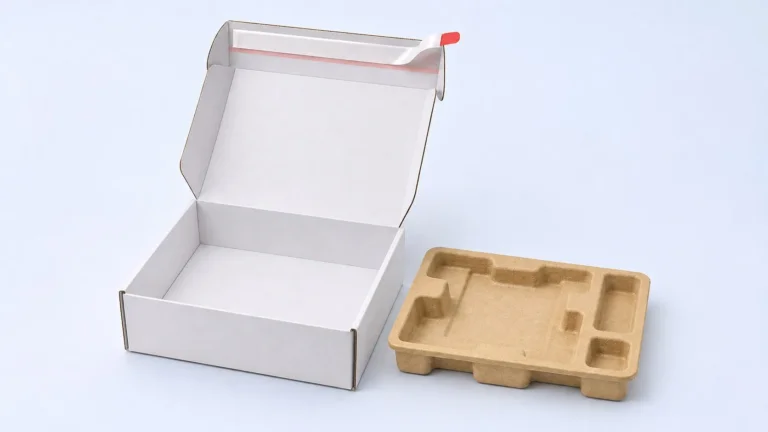
Two ideas from 2023 are still easy to defend. The first is a mailer with a built-in adhesive strip and pull tab, so no separate tape or sticker has to be removed. It gives a cleaner first impression, works as tamper evidence, and leaves room for a printed message under the flap. The second is printing product information on the inside of the box, instead of slipping a paper leaflet into a plastic sleeve. It uses surfaces you already pay for, and it removes a component from assembly.
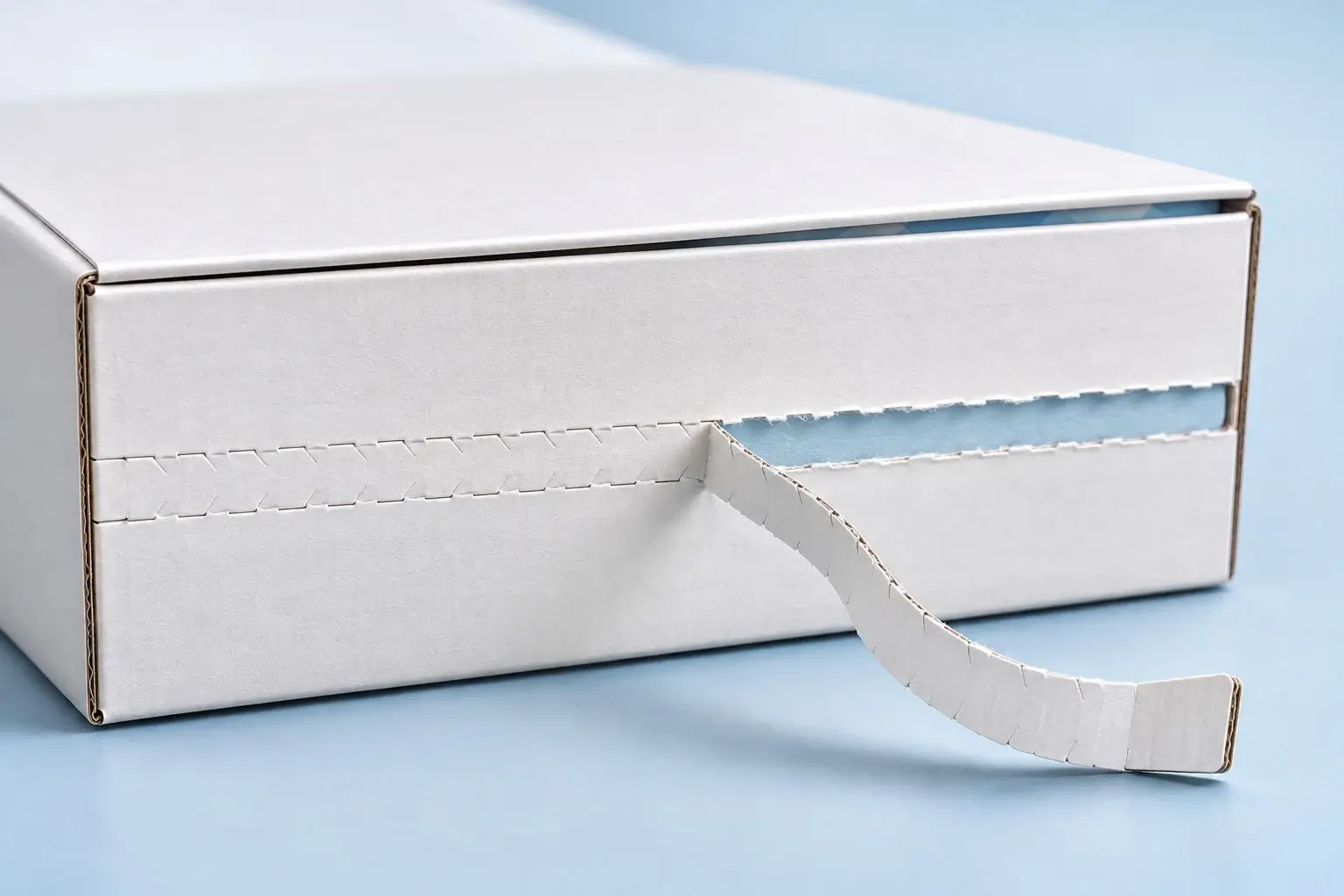
A common starting point is the interior print, because it is a print change and not a structural one. The built-in tape mailer is a structure change, so it adds die-line work and sampling; check when a clever structure becomes an operations problem before committing. Worth it when the box carries a premium product or a high return rate; harder to justify for a low-volume run. For how to weigh unboxing features against protection and packing cost, see unboxing experience design.
Fiber-Based Inserts and Cushioning
Foam and plastic inserts were the first thing brands asked to replace in 2023, and that demand has not reversed. Pulp board is the practical option for most small and mid-size programs: it is recyclable where fiber streams exist and easier to produce than newer materials. Honeycomb paper is the other reliable choice when you need rigidity with less material, because its hexagonal cell structure holds shape under load.
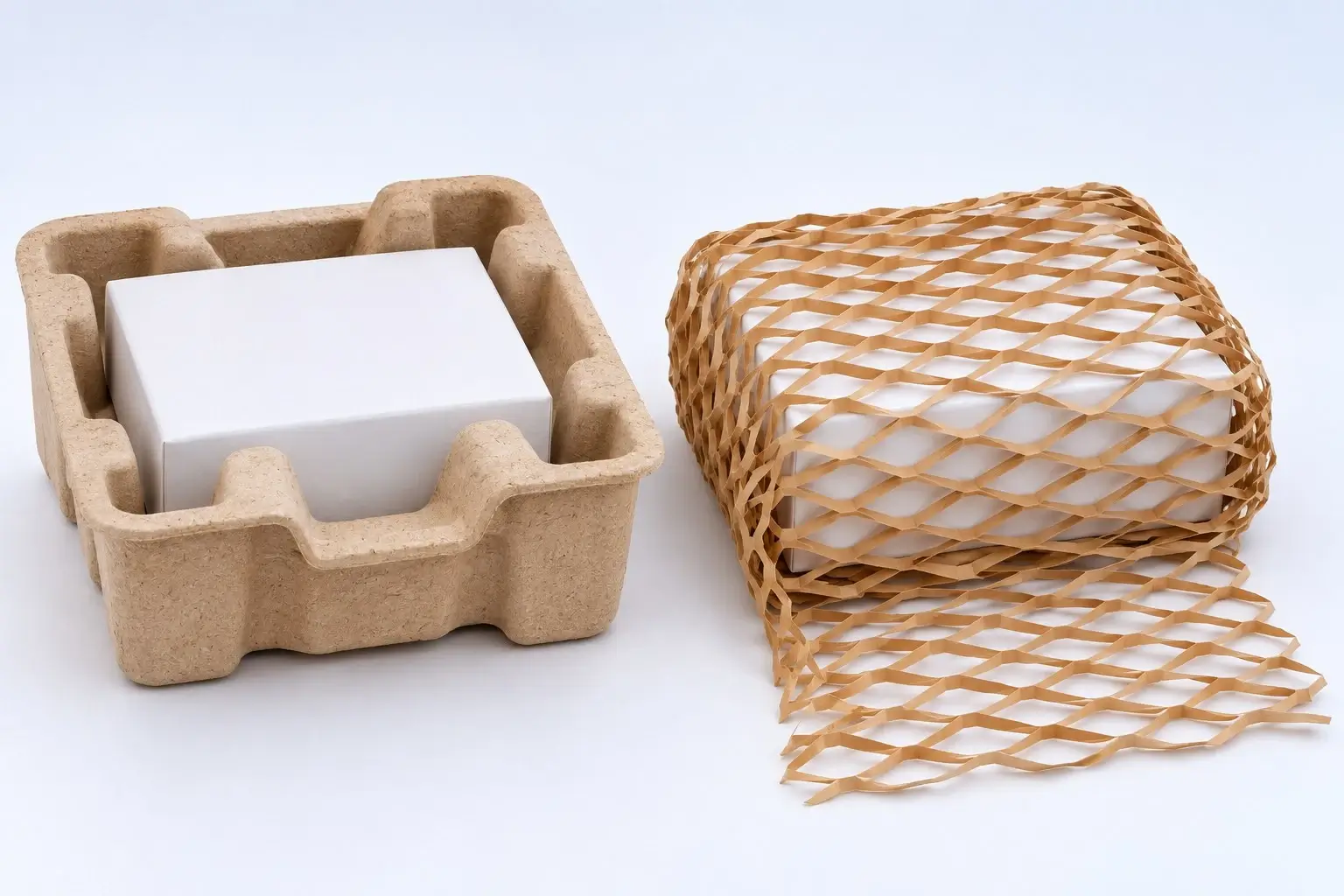
Expandable paper mesh is a third option when the goal is to wrap a product, not hold it in a fixed position. It is usually supplied compact and opened around the item, so it suits mixed or irregular shapes where a custom pulp tray is hard to justify. The trade-off is positioning: mesh cushions, but it does not locate the product in the carton, so test it with the real product inside the shipping carton.
The trade-off is protection per cubic centimeter. A fiber insert that is too thin fails on drop tests, and one that is thick enough can raise carton size and freight cost. Test the insert with the product inside the shipping carton, not on its own. For which paper format can replace foam or bubble wrap, see sustainable packaging inserts.
Regulation as a Design Input
The EU’s packaging rules went from a late-2022 Commission proposal to Regulation (EU) 2025/40, which entered into force in February 2025 and applies from August 12, 2026. The direction was stated early: all packaging on the EU market must be recyclable by 2030, and Member States must cut per-capita packaging waste against a 2018 baseline by 5% in 2030, 10% in 2035, and 15% in 2040. If any of your volume goes to the EU, material and recyclability decisions now belong at the start of a project, not after artwork is approved. For what applies now and what comes next, see EU PPWR compliance for US brands.
For the dates and how each trend is treated in 2026, see our 2026 packaging trends guide.
Trends to Watch, Not Buy Yet
Mycelium cushioning is the clearest example. Even large retailers have adopted it, but for a small business the technology is still maturing, and producing even a few molds requires a long lead time. Leaf-based paper, such as the Ukrainian start-up Releaf Paper’s process backed by a European Commission grant, shows where fiber packaging is heading. Confirm current availability and minimums with a supplier before planning around it. AI-driven box sizing, like Amazon’s work to reduce cardboard waste, matters mainly when you ship at volume and can feed the data back to your supplier.
Watch these. Ask suppliers about them. Do not rebuild a launch around them until a supplier can quote, sample, and commit to a lead time.
What Changed Around the Packaging Itself
Three business shifts from 2023 to 2025 affect purchasing more than any single material.
Consolidation among suppliers. Large deals reshaped the market: Stora Enso’s acquisition of De Jong Packaging Group, Sealed Air’s purchase of Liquibox, and later International Paper’s acquisition of DS Smith. For a buyer, the practical question is who owns the mill or converter behind your board, and whether pricing, minimums, or lead times change after an acquisition. To judge a supplier before you order, see how to evaluate custom packaging suppliers.
Tariffs and material costs. Duties on materials such as aluminum and recycled fiber move total cost without changing the design. Treat material price as a range in your budget, not a single quote. For how to plan landed cost after the 2026 changes, see US tariffs on packaging made in China.
Shifting sustainability targets. Several brands missed their 2025 plastic goals and reset them. Unilever, for example, moved its virgin-plastic cut from 50% by 2025 to 30% by 2026 and 40% by 2028, and pushed full recyclability to 2030 for rigid packaging and 2035 for flexibles. That gives you more time, but it also means suppliers’ recyclable options are still being built out. Choose designs that can switch material later without a new structure.
How to Decide: A Quick Map
| Trend | Verdict | Why | Check before committing |
|---|---|---|---|
| Interior-printed product information | Keep | Removes a component; print change only | Ink coverage and legibility on the board |
| Built-in adhesive mailer | Keep for premium or high-return SKUs | Cleaner opening, tamper evidence | Die-line, sample, adhesive performance in transit |
| Pulp, honeycomb, and paper mesh inserts | Keep | Recyclable, easier to produce | Drop test inside the shipping carton |
| EU-driven material choices | Keep, start early | Rules apply from August 2026 | Recyclability documentation for your target market |
| Mycelium cushioning | Watch | Long lead time at small volume | Supplier quote, lead time, minimum order |
| Leaf-based paper | Watch | Supply not confirmed | Availability at your quantity |
| AI box sizing | Watch unless high volume | Value depends on shipment data | Whether your supplier can use the output |
What to Verify Before You Commit
This is the one place to collect the checks. Confirm recyclability and the applicable rules for each market you sell into. Ask your supplier for material documentation instead of relying on a general claim. Run drop and compression tests with real product, and order a physical sample before approving artwork (see the packaging sampling guide for what to check). Where a structure changes, ask the supplier what it adds to tooling cost and lead time.
Where to Start
If you have one project this quarter, start with the change that costs the least and removes the most risk: an insert swap or an interior print. Move to structure changes when volume or product value justifies the tooling.
Talk with us. Let’s shape it together.