How do you package toothpaste tablets without plastic and keep them stable through production and shipping?
Split the job between two formats. A plastic-free barrier pouch protects the tablets from moisture and oxygen, and a metal tin gives a durable, travel-friendly pack. The pouch is where most of the risk sits: plant-based films seal and laminate less forgivingly than conventional plastic laminates.
The trade-off is development time. Expect several rounds of prototyping to fix sealing, bubbling, and delamination before the structure is stable. Before scaling, verify moisture protection with the actual tablets over time, inspect seals from production runs rather than hand samples, and confirm any compostability claim against a recognized certification before printing it.
Why toothpaste tablets are harder to package than they look
A tablet looks like an easy product to pack: it’s dry, solid, and doesn’t leak. The difficulty is moisture. Tablets pressed from powder can absorb humidity, which affects how they hold together and how they dissolve in use. Conventional packs solve this with plastic or plastic-aluminum laminates. A brand built on removing plastic has to reach a similar result with materials that are less mature.
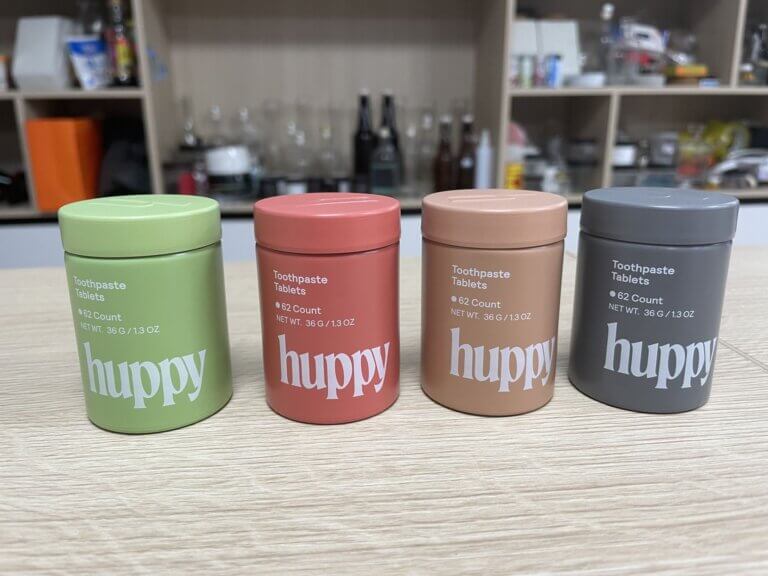
That was the brief on our project with Huppy, a toothpaste tablet brand that sells plastic-free formats: a pouch and a tin that protect the tablets, look consistent across SKUs, and contain no plastic. The full project story is on the Huppy case study page. This article focuses on the engineering decisions.
The barrier pouch: where plastic-free gets difficult
What the structure has to do
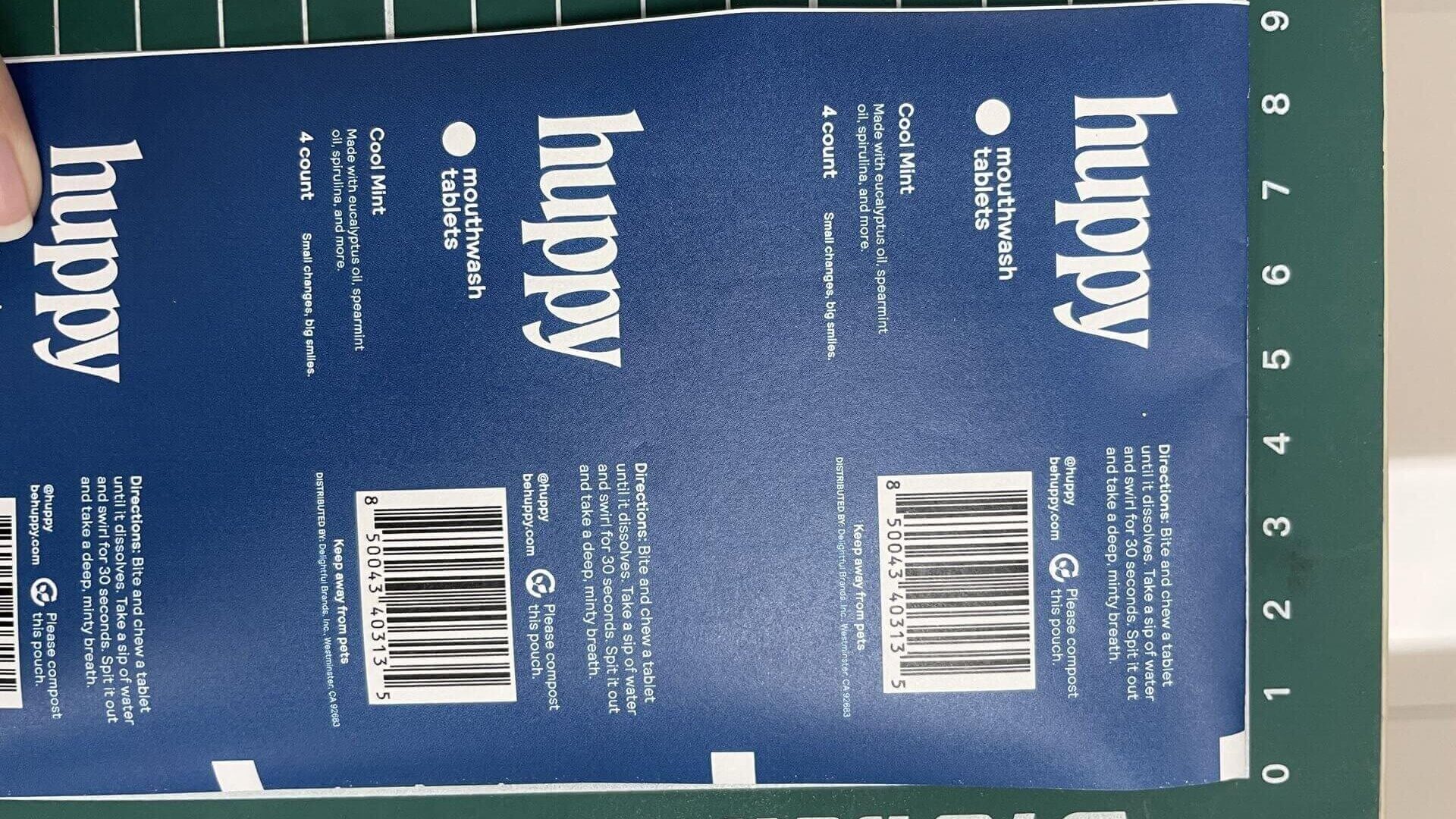
The pouch has to keep out moisture and oxygen, seal reliably on a filling line, carry print, and stay within a plastic-free material list. For Huppy, the structure combined PLA with a biodegradable foil layer in a three-layer laminate.
The failures to expect
Three problems came up during development, and they are typical of plant-based laminates:
- Bubbling between layers, which shows on the surface and can signal weak bonding.
- Delamination, where layers separate under handling or over time and the barrier is compromised.
- Seal breakdown, where the heat seal fails to close evenly or opens under pressure.
Each of these was worked through with rapid prototyping, adjusting the structure and sealing conditions and testing again until the pouch held. The practical point for other brands: plan for iteration. A plastic-free laminate that works on the first sample is the exception.
What to verify before scaling
Test seals and bond strength on pouches made on the production line, not hand-made samples. Store filled pouches with real tablets and check them over time for moisture pickup and changes in the tablets. If you plan to say “compostable” on pack, confirm which certification the material holds and in which markets that claim is allowed. Testing is arranged through a third-party lab and quoted separately.
The metal tin: keeping color and finish consistent
Why the coating moved to after forming
The tin uses a seamless double-lid design with no screw thread, sitting flush when closed. Forming a tin that shape involves deep drawing, which stretches the metal. When the color is applied before forming, the stretched areas can shift in tone, so pieces from the same order don’t match.
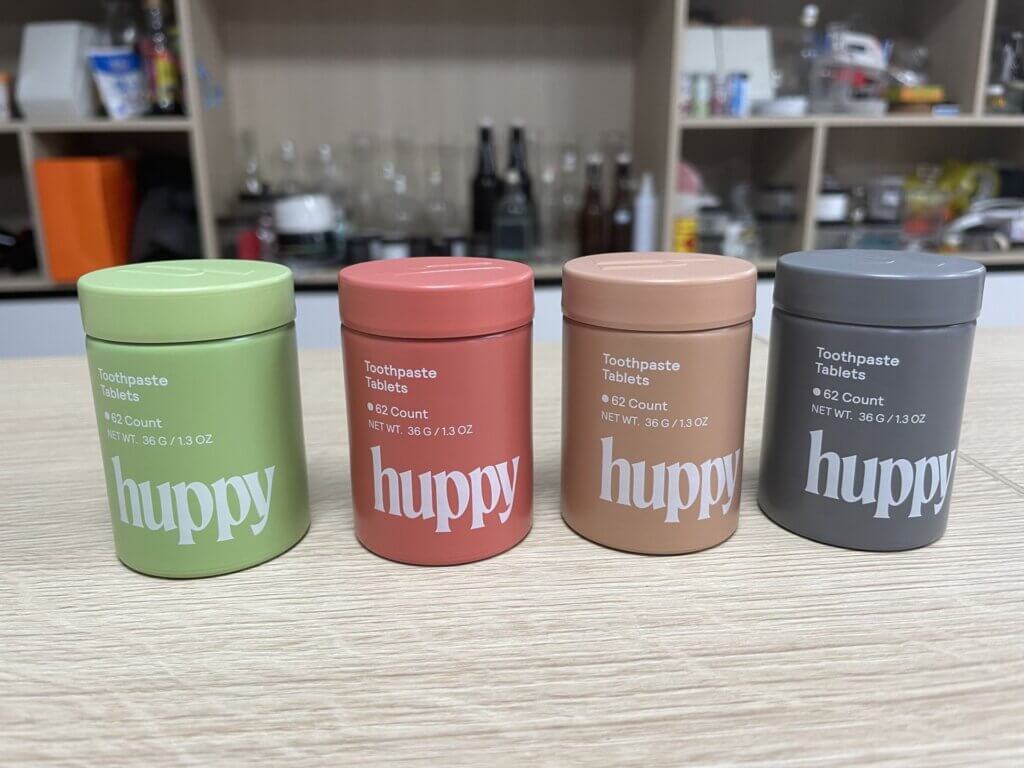
On this project, painting moved to after forming. That kept the color even across each tin and from batch to batch, which matters when a brand sells several SKUs side by side.
Finish and branding
An SPA UV finish added gloss and a tactile layer, and the brand mark was embossed on the tin. Embossing on metal raises the same question as on any component: once it’s in the stamping tool, changing it means new tooling. See Where does embossing pay off on cosmetic packaging? for how that decision plays out across materials.
Process control: what kept the project on track
Two practices made the difference more than any single material choice. First, custom tooling was developed against defined testing benchmarks, so “good enough to ship” had a clear meaning before production started. Second, when there was pressure to ship goods that hadn’t met those benchmarks, they were held back. Visual process maps and risk documentation kept the brand’s team and the production side aligned on what was changing and why.
What this means for other plastic-free projects
If you’re moving an oral care or personal care product out of plastic:
- Decide which format does which job. A barrier pouch and a durable tin solve different problems, and asking one pack to do both usually compromises it.
- Budget time for laminate development. Sealing and bonding issues are normal with plant-based films.
- Move color application after forming if you use drawn metal tins and need consistent color.
- Set test benchmarks before tooling, and hold to them.
- Verify every environmental claim before it goes on pack.
For a broader look at choosing sustainable materials by product type, see Which sustainable packaging option fits your cosmetic product?
FAQ
What replaced plastic in the toothpaste tablet pouch?
A three-layer laminate combining PLA with a biodegradable foil layer, developed through several rounds of prototyping to fix sealing and bonding issues.
Why paint metal tins after forming instead of before?
Deep drawing stretches the metal, and color applied beforehand can shift in the stretched areas. Painting after forming keeps the tone consistent across tins and batches.
Are plastic-free pouches as protective as plastic laminates?
They can be made to work, but the margin is smaller and development takes longer. Test moisture protection with your actual product over time before scaling.
Can I call a plastic-free pouch compostable?
Only if the material holds a recognized compostability certification and the claim is allowed where you sell. “Plastic-free” and “compostable” are separate claims and need separate support.

Talk with us. Let’s shape it together.