Skip to content

By 2026, cannabis is a $66+ billion global market. That number gets repeated often.
What matters more is how unevenly that revenue is governed.
If you’re operating across borders, packaging is no longer a design function. It’s a systems decision. Jurisdiction determines whether you carry one global SKU—or manage a warehouse full of near-identical variants that differ by warning symbol, resin code, or PCR declaration.
And most problems don’t show up in mockups. They show up in customs holds, recycling audits, EPR invoices, and recall notices.
Let’s look at the structural divide.
1. The Global Regulatory Spectrum: Federal Unity vs. State Patchworks
At the governance level, cannabis packaging sits between two opposing logics:
- Federal Uniformity (Canada)
- State-Level Patchwork (United States)
One favors national scalability. The other forces regional customization at scale.
Governance Model Comparison
| Category | Federal Uniformity (Canada) | State-Level Patchwork (USA) |
|---|---|---|
| Scalability | High: One compliant design serves the entire national market. | Low: State-specific SKUs required for labels, materials, warnings. |
| Regulatory Consistency | Centralized under Health Canada. | Conflicting rules between states (PCR mandates, recyclability definitions, labeling language). |
| Compliance Complexity | Streamlined documentation and testing standards. | Managing 20+ active regulatory frameworks simultaneously. |
From a packaging operations standpoint, the difference is cost predictability.
In Canada, you engineer once.
In the U.S., you re-engineer continuously.
That structural divide sets the tone for everything that follows.
2. Canada: The Fortress of Plain Packaging
Under the Cannabis Act


Canada remains the global anchor for strict plain packaging. Brand expression is secondary. Public health signaling is primary.
By 2026, the March 2025 amendments introduced modest tactical flexibility. Not branding freedom—just breathing room.
Core Structural Restrictions
- Uniform Color & Texture
Single, uniform color. Smooth finish. No embossing. No hidden coatings. No metallic sheen. - Warning Dominance
Standardized health warnings plus the mandatory red/black THC symbol must occupy fixed, prominent space. - Typography Controls
Legibility rules remain tight, though THC/CBD bolding rigidity has been slightly relaxed.
You don’t win in Canada with graphics.
You win with structural clarity.
2025 Compliance Openings
- QR Codes for Factual Data
Certificates of Analysis, terpene profiles, grower information. Informational only. No promotional drift. - Transparent Elements
Cut-out windows and transparent containers allow visual product inspection. That sounds minor. It isn’t. Consumers trust what they can see. - Label Simplification
Removal of certain equivalency and expiry redundancies reduced clutter. Peel-back labels are now being used intelligently for multilingual instructions.
Canada’s rigidity has had an unintended side effect: export advantage. Its packaging baseline already aligns with European medical expectations. That matters when moving into Germany.
3. The United States: The Multi-State Compliance Maze


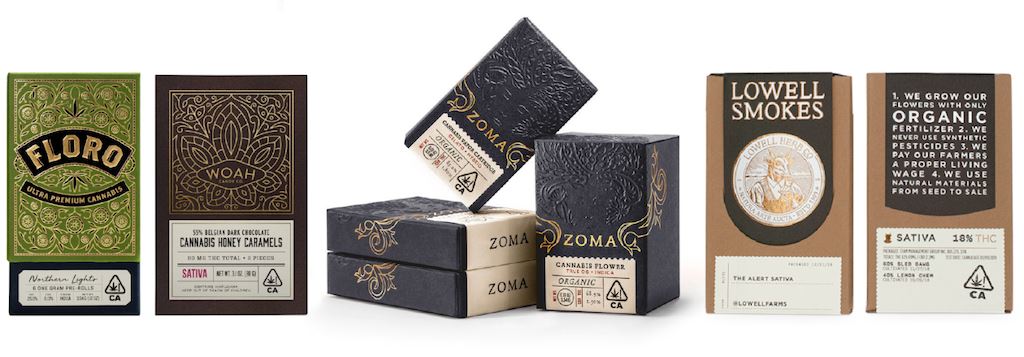

The U.S. isn’t a national cannabis market. It’s a federation of regulatory experiments.
Two states currently shape the gravity field:
- Packaging Reduction and Recycling Infrastructure Act (New York)
- California Senate Bill 54 (California)
National brands quietly design to the strictest state requirement. It’s the only way to keep supply chains sane.
New York: PCR as Mandate
- 25% Post-Consumer Recycled (PCR) plastic required
- Shift toward mono-material PE or PP
- Clear documentation of recycled content sourcing
PCR sounds straightforward. It isn’t. Supply volatility alone can derail launch timelines.
California: Extended Producer Responsibility (EPR)
- Fees scale with recyclability performance
- “Non-recyclable” multi-layer Mylar is increasingly penalized
- Source reduction requirements target total material weight
California doesn’t just regulate what the pack is. It regulates how much of it exists.
Meanwhile, branding has shifted. Less neon, fewer cannabis clichés. Earth tones, minimal typography, wellness adjacency. Demographic shifts—particularly among women and alcohol-replacement consumers—have quietly normalized the category.
Design tone changed because the buyer changed.
But operationally, the real pressure is materials engineering.
4. Germany’s Pillar 2: The Science-First Model

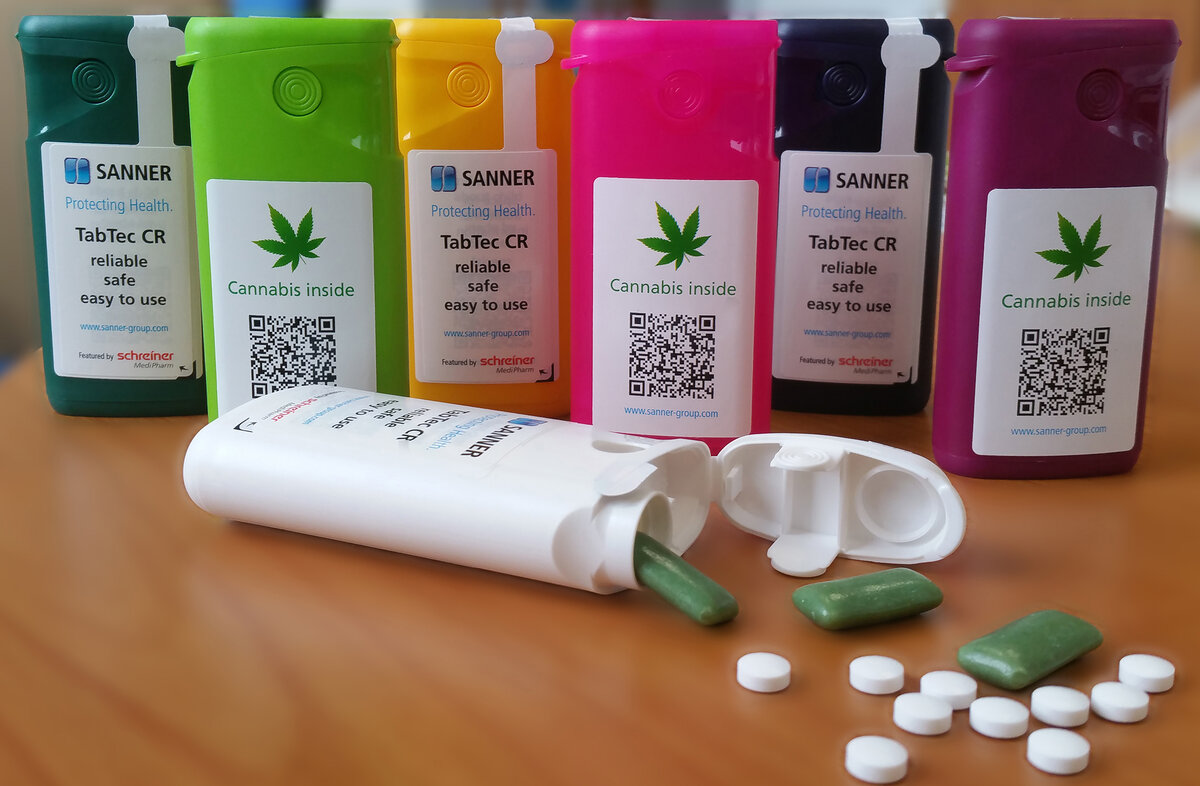
Germany’s commercial model is cautious and clinical.
Under the 2025 launch of Cannabisgesetz (CanG), “Pillar 2” pilot projects operate in municipalities including Berlin and Frankfurt.
Success is measured in data, not shelf presence.
Four Structural Expectations
- Visual Neutrality
Medicine-style white cartons. Natural-tone containers. Zero glamorization. - High-Granularity Labels
Harvest dates. THC/CBD percentages. Terpene profiles. Irradiation status. - Pharmacovigilance Mechanisms
Adverse reaction reporting systems tied to batch codes. - Closed-Loop Traceability
Seed-to-sale tracking with diversion prevention.
If Canada is restrictive, Germany is clinical. The packaging feels closer to pharmaceutical secondary cartons than retail cannabis.
And now the European Union is raising the bar further.
5. The EU PPWR: Design-for-Recycling as Gatekeeper
Effective August 12, 2026, the Packaging and Packaging Waste Regulation (PPWR) enforces mandatory Design-for-Recycling standards.
By 2030, packaging must achieve at least 70% recyclability performance to remain on the EU market.
This isn’t advisory. It’s existential.
Immediate Risk Areas
- Carbon Black Pigments
Invisible to NIR sorting systems. Increasingly non-viable. - Empty Space Restrictions
Secondary packaging limited to 50% empty space. Oversized “luxury” cartons become compliance liabilities. - Composite Laminates & PFAS
Aluminum-plastic hybrids and chemically treated moisture barriers face elimination if they cannot be separated in standard recycling streams.
Many cannabis brands built around multi-layer Mylar now face structural redesign. Not cosmetic redesign. Structural.
This is where most export ambitions stall.
6. Innovation as Compliance


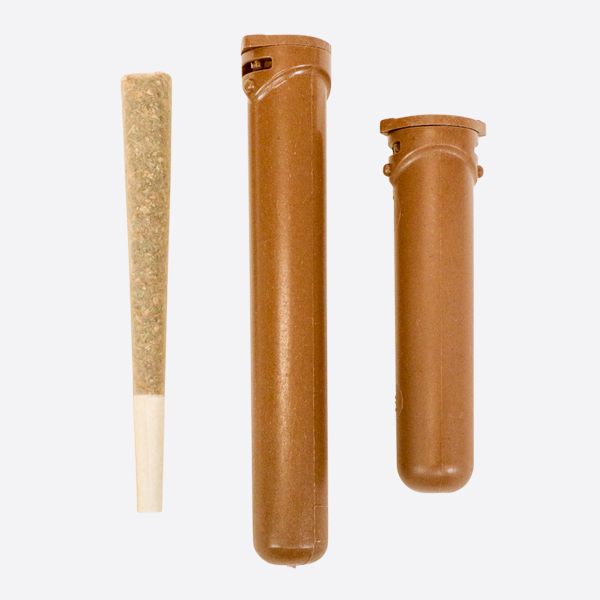
The smart operators stopped arguing with regulators. They redesigned around them.
Materials Shifts
- Mycelium Inserts
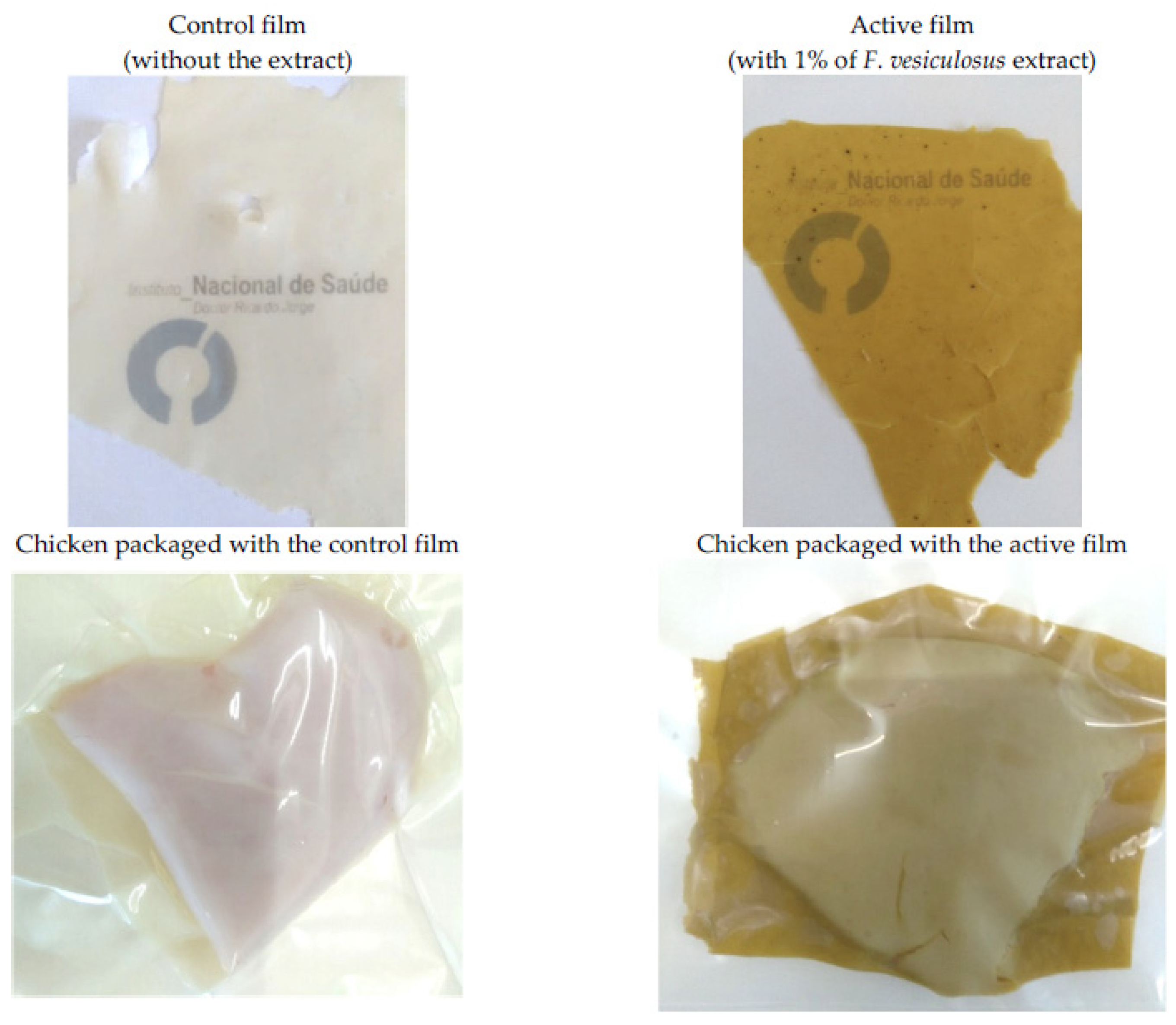
Compostable protective structures. Favorable under EPR frameworks. - Seaweed-Based Films
Early-stage but promising for window applications. - Hemp Bioplastic Components
Particularly for CR lids and pre-roll tubes—material narrative aligned with circular logic.
Digital Product Passports (NFC / QR)
Digital layers now carry multilingual instructions, compliance updates, and authentication.
In the EU, they offset label density.
In New York, they help verify legitimacy.
In Germany, they support pharmacovigilance tracking.
A well-placed NFC tag can prevent a recall from becoming a write-off.
That’s not marketing. That’s cost containment.
7. Cross-Border Compliance Matrix (2026 Snapshot)
| Region | Visual Philosophy | Core Sustainability Driver | Strategic Packaging Focus |
|---|---|---|---|
| Canada | Plain | Federal public health framework | Structural engineering + factual QR transparency |
| USA | Restricted Brand | SB 54 / PCR mandates | Mono-material plastics + demographic-aligned aesthetics |
| EU (Germany Focus) | Neutral / Medical | PPWR (70% recyclability) | NIR-detectable materials + traceable data systems |
Final Advisory
If you design for the most lenient jurisdiction, you will redesign within 18 months.
If you design for Canada’s plain-pack logic and the EU’s recyclability threshold, you create optionality.
Compliance-by-design isn’t a slogan. It’s inventory control. It’s customs clearance speed. It’s not destroying pallets because a pigment failed NIR testing.
Higher unit cost often lowers total system cost.
Most packaging failures don’t happen at approval. They happen after scale.
FAQ Section
Structurally, yes—if designed to Canada’s plain-pack baseline and engineered to meet EU PPWR recyclability thresholds. Label overlays and language adjustments will still be required, but core material architecture can align.
Increasingly risky. Under PPWR Design-for-Recycling criteria, composite laminates that cannot be separated in standard recycling streams face effective market exit.
Design to the strictest state (typically California’s EPR + recyclability standards), then layer state-specific labeling through modular artwork systems.
Not universally mandatory for cannabis, but strategically advantageous in the EU. They reduce physical label density and mitigate recall risk.
Per unit, often yes. Across the system, not necessarily. Reduced EPR fees, improved retailer acceptance, and avoided redesign cycles frequently offset the premium.