Embossing vs. Debossing: How to Choose for Your Packaging
Updated November 4, 2026
Both embossing and debossing are printing design techniques, which are used for either impressing or depressing a logo (or an image) onto paper, cardboard, leather, or other such materials of your choice.
Quick Answer
Should your logo be raised off the packaging or pressed into it?
Choose embossing when you want the mark to catch light and read from a distance, on a surface whose reverse side stays hidden, such as rigid-box wrap. Choose debossing when the surface will be handled, stacked, or rubbed in transit, or when you want a quieter mark. Stock, box construction, and foil registration matter more than the effect itself.
Both work on most paperboard, leather, and many coated or laminated stocks. The real limits are thin stocks where the reverse side shows and corrugated board, where pressure crushes the flute. Neither is automatically cheaper: cost follows die type, size, depth, and whether the impression has to line up with print or foil. Approve a pressed sample on production stock before you sign off.
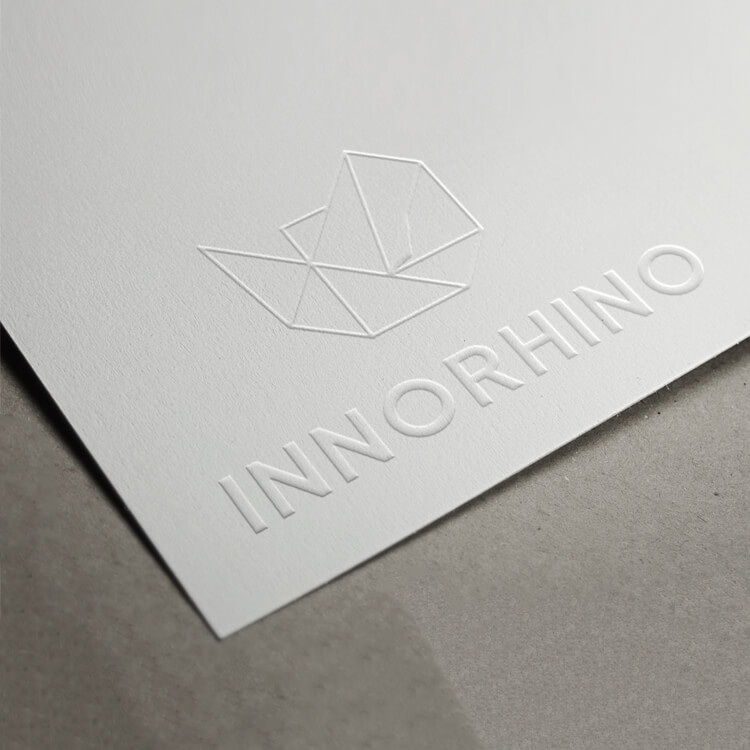
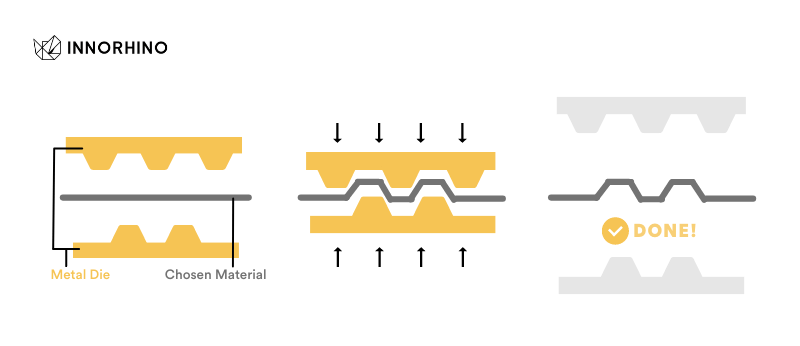
Embossing uses a matched pair of dies. The sheet sits between them and is pushed up from behind, so the design stands proud of the surface and the reverse side shows a hollow mirror image.
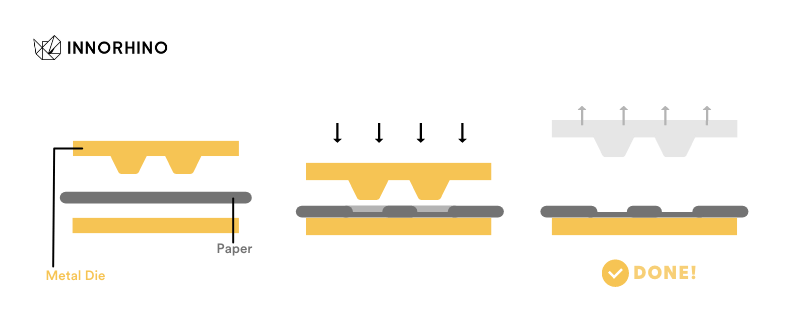
Debossing presses the design down from the face. On a thin sheet the reverse side shows a raised version of the mark. On a thick stock, or once the paper is mounted to board, the back stays flat.
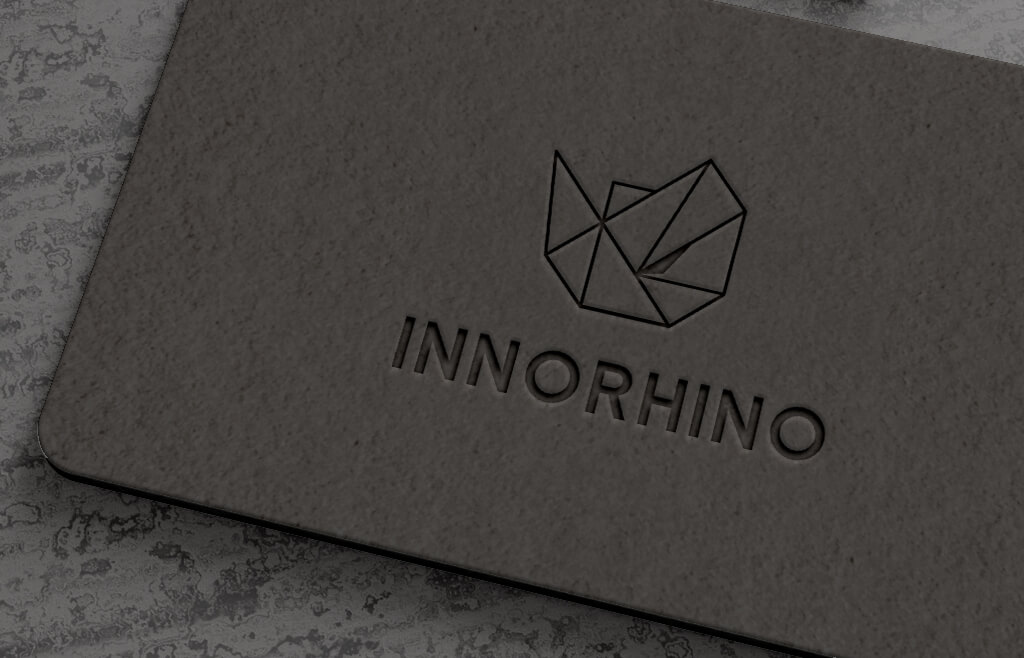
Either one can be done three ways. A blind impression has no ink or foil and relies on shadow alone. A registered impression lines up with a printed element. A combination impression is pressed and foil-stamped together, which is common for logos on premium boxes.
Blind deboss
Embossing
Debossing
Surface effect
Raised; catches light from above
Recessed; reads through shadow
Reverse side
Hollow mirror image
Raised mark on thin stock; flat on thick or mounted stock
In handling and stacking
Raised area can flatten or scuff
Protected below the surface
Typical fit
Rigid-box lids and wraps, sleeves where the back is hidden
Covers that get handled, soft-touch surfaces, leather and leatherette
What to check
Reverse side visibility, crush in stacking
Depth on thin stock, show-through
How to Choose
Start with the stock
Thicker, uncoated papers with long fibers take depth and hold a crisp edge. Coated stocks and film laminations can crack along the edge of a deep impression, and the risk rises with depth. Soft-touch lamination with a blind deboss is a common pairing, but it still needs a press test on the actual laminate, because film behavior differs between suppliers.
Check whether the reverse side will be seen
On a rigid box, the wrap is pressed before it is mounted onto greyboard, so the back of the impression disappears and both finishes are open to you. On a folding carton, the inside panel is visible the moment the customer opens it, and an emboss shows its hollow back there. If the inside matters, use a deboss, print the inside, or move the mark to a panel where the back is covered. On corrugated board, neither finish gives crisp detail, because the pressure crushes the flute.
Think about how the pack travels
A raised emboss on the top of a lid takes the load when boxes are stacked in a carton or on a pallet, and it can come out flatter or scuffed. If the packs ship stacked without a protective layer between them, a deboss or a combination impression placed away from the contact surface holds up better.
Match the die to the detail and the foil
Fine lines and small type lose definition in both finishes; confirm the minimum line weight with the die maker for your artwork and stock. Multi-level or sculpted dies give more detail than a single-level die, and take longer and cost more to make. When the impression must line up with print or foil, the press has to hold registration between two operations, and that tolerance is what drifts first in a long run.
What Goes Wrong in Mass Production
Most problems only show up after the sample stage. Depth varies from sheet to sheet when pressure or makeready is not held steady. Edges crack when the stock or laminate is pushed too far. The impression drifts off the printed or foiled area across a run. A mark placed too close to a crease can interfere with folding and gluing. Over a long run the die itself wears, and the edges soften.
How to Verify Before You Approve
Ask for a strike-off on the actual production stock and lamination, not a substitute paper. Look at it under low-angle light, which is how the effect reads on a shelf, and check the reverse side inside the assembled box. Stack a few finished samples the way they will ship and check the impression afterward. Then agree on depth and registration tolerance in writing, and keep a signed golden sample that the production run is checked against.
FAQ
Can embossing and foil stamping be combined?
Yes. A combination die presses and foils in one pass, or the two are done in separate passes in register. Either way, registration between the foil and the impression is the item to check on the sample.
Can you deboss leather, leatherette, or plastic?
Yes. Heated debossing on leather and leatherette is common, and many plastics can be heat-debossed. Results depend on the material and its coating, so test on the exact material.
Is embossing more expensive than debossing?
Not inherently. Cost is driven by die material and type, size, depth, and whether the impression must register with print or foil, not by which direction the design goes.
If you already have a dieline and a stock in mind, send them with your target quantity and we can talk through which finish fits the box and how to sample it.
Custom packaging solutions go beyond product protection. They help brands improve presentation, product fit, shipping efficiency, and production scalability. At INNORHINO, we combine structural engineering, material selection, design, and manufacturing to create packaging that balances brand impact, functionality, and real-world production needs.
INNORHINO Packaging Team consists of packaging consultants, designers, and manufacturing specialists with extensive experience in custom packaging development, production, and global sourcing. Our content is based on real-world industry expertise, project experience, and packaging best practices.
INNORHINO Taipei, Shenzhen, Ho Chi Minh City, Los Angeles
--
One-stop custom packaging supplier with global locations. Our goal is to help entrepreneurs thrive in a competitive environment with tailored packaging solutions.
To provide the best experiences, we use technologies like cookies to store and/or access device information. Consenting to these technologies will allow us to process data such as browsing behavior or unique IDs on this site. Not consenting or withdrawing consent, may adversely affect certain features and functions.
Functional
Always active
The technical storage or access is strictly necessary for the legitimate purpose of enabling the use of a specific service explicitly requested by the subscriber or user, or for the sole purpose of carrying out the transmission of a communication over an electronic communications network.
Preferences
The technical storage or access is necessary for the legitimate purpose of storing preferences that are not requested by the subscriber or user.
Statistics
The technical storage or access that is used exclusively for statistical purposes.The technical storage or access that is used exclusively for anonymous statistical purposes. Without a subpoena, voluntary compliance on the part of your Internet Service Provider, or additional records from a third party, information stored or retrieved for this purpose alone cannot usually be used to identify you.
Marketing
The technical storage or access is required to create user profiles to send advertising, or to track the user on a website or across several websites for similar marketing purposes.
Our team of in-house designers and experts can help you create solutions that bring unique experiences to your users, build brand loyalty and promote your products.
Whether you need advice, a quote, or just want to chat about your packaging needs, we’re here for you.
With more than 1000+ products to choose from, our team of in-house designers and experts can help you create solutions that bring unique experiences to your users, build brand loyalty and promote your products.
Please fill out the request form below and we will send our luxury packaging pack selection for cannabis to you soon!
download playbook
How to Avoid Manufacturing Traps and Cost Overruns in Custom Packaging