Is fully plastic-free packaging the right call for a moisture-sensitive product like toothpaste tablets?
Commit to fully plastic-free when the plastic-free claim is central to the brand and the launch schedule can absorb several rounds of laminate development. Plant-based pouch films leave less margin for moisture protection, sealing, and bonding than conventional laminates, so the schedule and budget need room for iteration before the structure is stable.
- •Applicable conditions: plastic-free is core to the brand promise and the launch date can move. A fixed retail deadline, a long shelf-life target, or hot and humid distribution leaves less room for an unproven laminate.
- •Key trade-off: development time and cost. Expect several prototyping rounds before the pouch seals and bonds reliably, and the metal tin adds its own tooling and finishing work.
- •Verification step: set the moisture-protection target and the pass/fail criteria for seals and bond strength before tooling, then test filled pouches with the actual tablets from a production run. Confirm any compostability claim against a recognized certification before printing it.
Why toothpaste tablets are harder to package than they look
A tablet looks like an easy product to pack: it’s dry, solid, and doesn’t leak. The difficulty is moisture. Tablets pressed from powder can absorb humidity, which affects how they hold together and how they dissolve in use. Conventional packs solve this with plastic or plastic-aluminum laminates. A brand built on removing plastic has to reach a similar result with materials that are less mature.
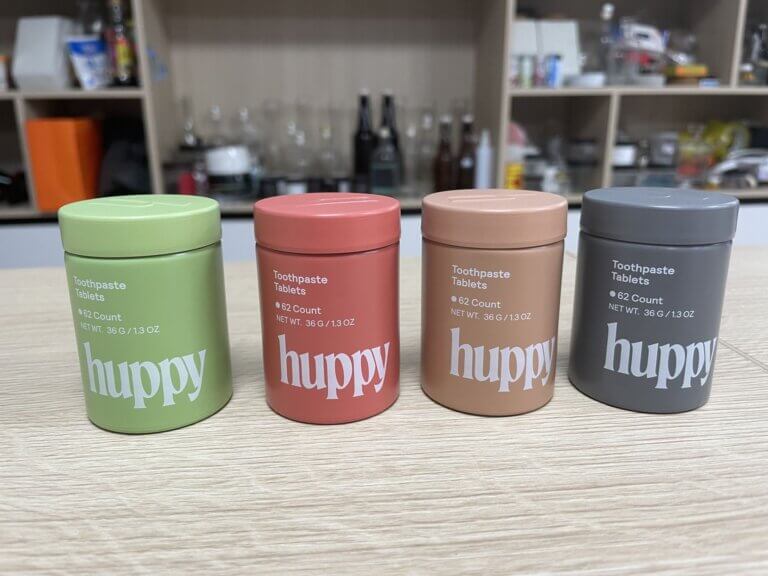
That was the brief on our project with Huppy, a toothpaste tablet brand that sells plastic-free formats: a pouch and a tin that protect the tablets, look consistent across SKUs, and contain no plastic. The full project story is on the Huppy case study page. This article focuses on the engineering decisions.
The barrier pouch: where plastic-free gets difficult
What the structure has to do
The pouch has to keep out moisture and oxygen, seal reliably on a filling line, carry print, and stay within a plastic-free material list. For Huppy, the structure combined PLA with a biodegradable foil layer in a three-layer laminate.
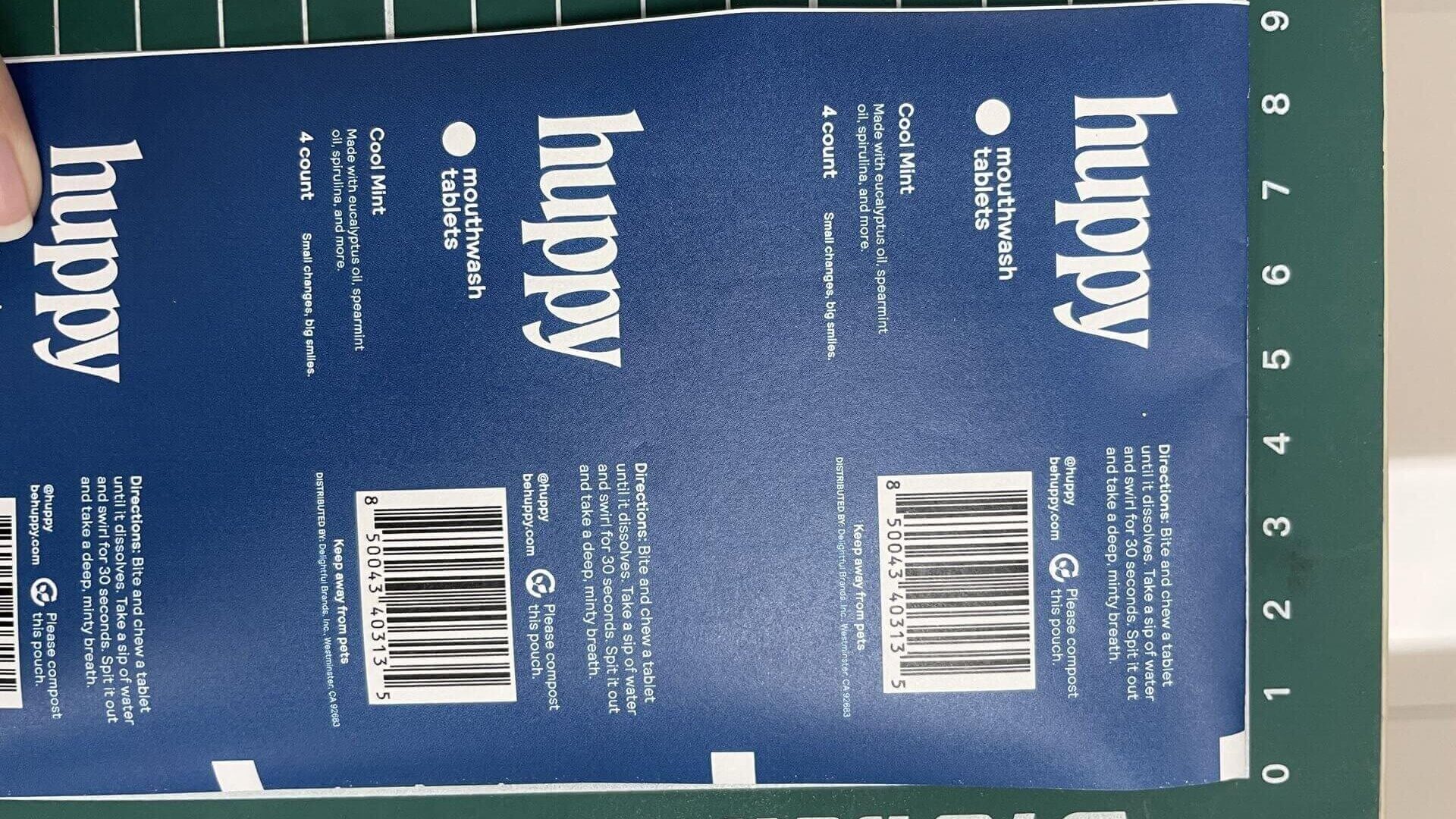
The failures to expect
Three problems came up during development, and they are typical of plant-based laminates:
- Bubbling between layers, which shows on the surface and can signal weak bonding.
- Delamination, where layers separate under handling or over time and the barrier is compromised.
- Seal breakdown, where the heat seal fails to close evenly or opens under pressure.
Each of these was worked through with rapid prototyping, adjusting the structure and sealing conditions and testing again until the pouch held. The practical point for other brands: plan for iteration. A plastic-free laminate that works on the first sample is the exception.
What to verify before scaling
Test seals and bond strength on pouches made on the production line, not hand-made samples. Store filled pouches with real tablets and check them over time for moisture pickup and changes in the tablets. If you plan to say “compostable” on pack, confirm which certification the material holds and in which markets that claim is allowed. Testing is arranged through a third-party lab and quoted separately.
The metal tin: keeping color and finish consistent
Why the coating moved to after forming
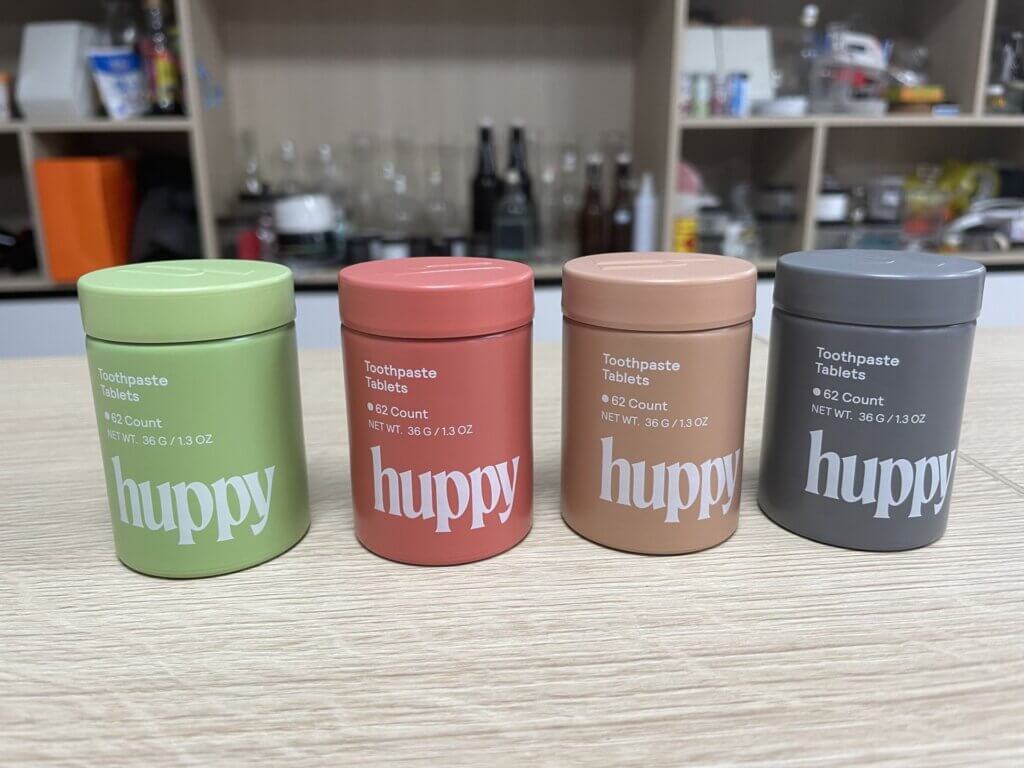
The tin uses a seamless double-lid design with no screw thread, sitting flush when closed. Forming a tin that shape involves deep drawing, which stretches the metal. When the color is applied before forming, the stretched areas can shift in tone, so pieces from the same order don’t match.
On this project, painting moved to after forming. That kept the color even across each tin and from batch to batch, which matters when a brand sells several SKUs side by side.
Finish and branding
A Spot UV finish added gloss and a tactile layer, and the brand mark was embossed on the tin. Embossing on metal raises the same question as on any component: once it’s in the stamping tool, changing it means new tooling. See Where does embossing pay off on cosmetic packaging? for how that decision plays out across materials.
Process control: what kept the project on track
Two practices made the difference more than any single material choice. First, custom tooling was developed against defined testing benchmarks, so “good enough to ship” had a clear meaning before production started. Second, when there was pressure to ship goods that hadn’t met those benchmarks, they were held back. Visual process maps and risk documentation kept the brand’s team and the production side aligned on what was changing and why.
Before you commit to plastic-free: when it fits and what it costs
A plastic-free format is a decision about schedule and budget as much as materials. The points below are general guidance for this kind of project, not Huppy’s figures.
When it fits. Plastic-free suits a brand whose positioning depends on it, a dry product that a tested barrier can protect, and a launch date with some give. It fits less well when the product has a long shelf-life target, ships through hot and humid routes, or is tied to a retail slot that leaves no time to iterate. In those cases a lower-plastic structure that is proven may serve the brand better than a fully plastic-free one that is not.
What it costs in time. Bubbling, delamination, and seal breakdown show up in prototyping, not in a specification review. Each round of prototype, test, and adjustment moves the production date, and the number of rounds is hard to predict until the first samples are sealed on real equipment. Set the launch date after the pouch passes its tests, not before.
What it costs in budget. Beyond the unit price, budget for the prototype rounds, third-party testing (quoted separately from production), custom tooling for the tin, and the cost of re-running a batch that fails seal inspection. Ask for these to be listed separately from the quote for the finished pack.
What to agree before you start. Set a moisture-protection target, pass/fail criteria for seal and bond strength, and the temperature and humidity conditions of the routes you ship through. Without them, “it holds” has no definition and the schedule has no end point.
What this means for other plastic-free projects
If you’re moving an oral care or personal care product out of plastic:
- Decide which format does which job. A barrier pouch and a durable tin solve different problems, and asking one pack to do both usually compromises it.
- Budget time for laminate development. Sealing and bonding issues are normal with plant-based films.
- Move color application after forming if you use drawn metal tins and need consistent color.
- Set test benchmarks before tooling, and hold to them.
- Verify every environmental claim before it goes on pack.
For a broader look at choosing sustainable materials by product type, see Which sustainable packaging option fits your cosmetic product?
FAQ
What replaced plastic in the toothpaste tablet pouch?
Why paint metal tins after forming instead of before?
Are plastic-free pouches as protective as plastic laminates?
Can I call a plastic-free pouch compostable?
When is fully plastic-free packaging a poor fit?

Talk with us. Let’s shape it together.