The First Clinical Touchpoint
For brand owners and product managers, supplement packaging can no longer function merely as an aesthetic wrapper. It is the consumer’s first clinical touchpoint.
Long before a buyer scrutinizes a proprietary blend or ingredient label, the physical container acts as a non-verbal proxy for safety, efficacy, and brand rigor. If a high-end nootropic feels cheap in the hand, the consumer will unconsciously doubt the science inside the capsule. To command authority and justify premium pricing, your product’s physical identity must project the exact same biological promise as the formula itself.
Key Takeaways for Brand Managers:
- Structural engineering and barrier properties must dictate design, not the other way around.
- Information architecture should prioritize cognitive ease, especially for senior demographics.
- Sustainable materials (PCR) are increasingly required but introduce strict barrier and stability trade-offs.
Barrier Integrity: The Non-Negotiable Baseline of Trust
A degraded product is the ultimate violation of consumer trust. Structural engineering must prioritize barrier properties above all else.
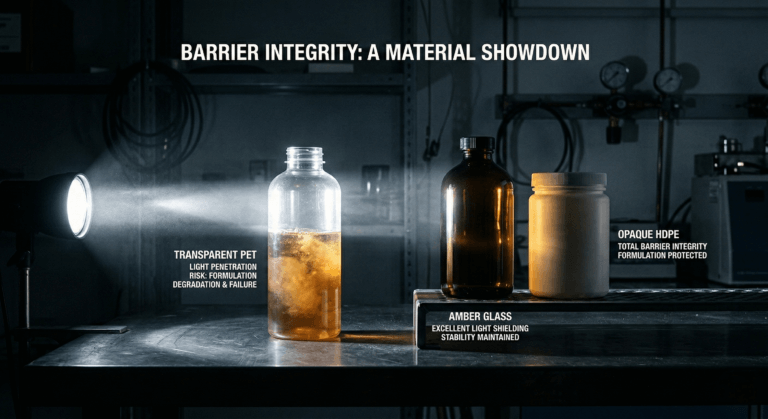
Specifying clear PET for light-sensitive ingredients because it “looks cleaner” on the shelf is a critical failure in packaging strategy. To protect formula potency throughout its shelf life, brand owners must rely on materials that provide a physical guarantee against moisture, oxygen, and UV light degradation. This means engineering containers that strictly adhere to pharmacopeia testing standards, such as USP <671>, which outlines the exact light transmission limits required to protect delicate formulations.
Material Decision Criteria:
Clear PET: Only suitable for highly stable formulations where visual product visibility drives purchasing behavior.
Amber Glass / Opaque HDPE: Optimal for highly light-sensitive or oxidation-prone formulas.
Mylar Bags with High-Barrier Foils: Best for bulk powders requiring strict moisture control.
Ergonomics and Information Architecture
Label transparency is the primary currency of brand honesty. If consumers feel they have to hunt for dosages, contraindications, or hazard warnings, their perception of product safety collapses instantly.

Designing for the High-Value Senior Demographic
This structural and visual clarity is critical for the senior demographic. Here, typography and physical structure transition from aesthetic choices to ergonomic necessities.
Common Mistakes in Senior-Friendly Design:
- Treating “senior-friendly” as simply bumping the font size to 14pt.
- Prioritizing high-gloss finishes that create glare and obscure text.
- Using smooth, minimalist caps that require significant grip strength to open.
The Practical Checklist for Ergonomics:
- [ ] Use high-contrast, sans-serif fonts with generous leading.
- [ ] Integrate structural ease-of-opening, such as high-friction grip patterns on closures.
- [ ] Ensure compliance with child-resistant requirements while maintaining adult accessibility, meeting the CPSC Poison Prevention Packaging Act (16 CFR § 1700.15) protocols, which require that 90% of tested adults aged 50-70 can successfully open the package.
Color Strategy and Biological Signaling
In the nutraceutical space, color acts as a biological signal. It allows buyers to navigate the shelf through intuitive, benefit-led cues before they read a single word.

The Functional Color Framework:
Premium Deep Blue / Obsidian: Projects cognitive authority and calm stability. The emerging signature for high-end nootropics and longevity supplements.
Clinical White / Silver: Positions the brand as pharmaceutical-grade. The gold standard for foundational daily vitamins and minerals.
Botanical Green / Earth Tones: Signals clean-label, traceable origins, and plant-based formulas.
Vibrant Orange / Neon Citrus: Targets the performance sector. Triggers a physiological “ready” state suited for energy and pre-workout products.
Tactile Authority and Sensory Confirmation
The moment a consumer picks up a product, they transition from visual interest to physical ownership. The haptics of a package—how it feels, sounds, and resists—serve as the final filters of quality.

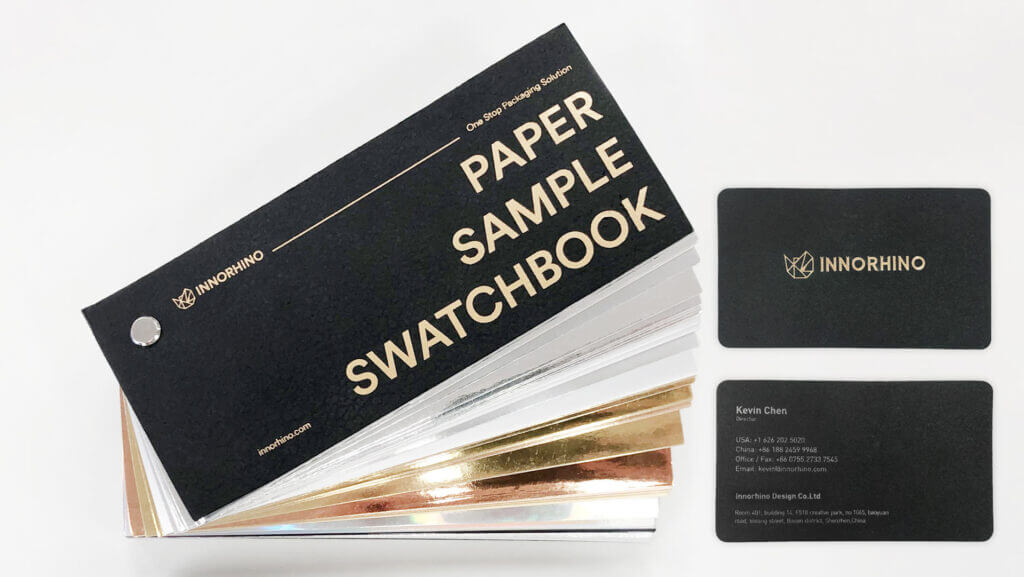
Adding physical texture through embossing or debossing creates a sense of permanence. It suggests a brand has the financial stability and heritage to invest in custom tooling, rather than relying on off-the-shelf stock components and adhesive labels.
The Sound of Safety
Auditory feedback is a highly underrated trust signal. The precise click of a child-resistant closure or the distinct snap of a tamper-evident seal provides the consumer with immediate, sensory confirmation that the product is secure and untouched.
Eco-Trust vs. Efficacy-Trust: Navigating PCR Plastics
The next frontier of brand integrity involves integrating sustainable materials like Post-Consumer Recycled (PCR) plastics.
However, integrating PCR introduces significant commercial and structural trade-offs. While PCR builds “Eco-Trust” and satisfies retail sustainability mandates, it can occasionally compromise barrier properties, wall thickness, or color consistency. Market leaders must carefully balance this Eco-Trust with the non-negotiable reality of “Efficacy-Trust.” The move toward a circular economy cannot come at the expense of the supplement’s chemical stability.
Furthermore, any sustainability claims printed on the final label must align strictly with the FTC Green Guides (16 CFR Part 260). Accurately defining terms like “recyclable” and correctly stating PCR percentages protects brands from the severe commercial and legal risks of greenwashing.

PCR Integration Matrix:
| Material Focus | Primary Benefit | Key Risk / Trade-off | Best Application |
| 100% Virgin Plastic | Total barrier consistency, perfect color matching. | Low Eco-Trust, future regulatory pushback. | Highly sensitive, premium medical-grade formulas. |
| 30-50% PCR Blend | Strong Eco-Trust, meets retail mandates. | Potential color flecking, slight structural variances. | Standard daily vitamins, stable dry powders. |
Buyer Questions: Navigating Supplement Packaging Production
Packaging is the consumer’s first clinical touchpoint. Materials like amber glass and thick-walled opaque plastics provide physical guarantees against light and moisture. If a delicate, light-sensitive formula is packaged in thin, clear plastic, it violates consumer trust and practically guarantees product degradation.
For senior buyers, design must eliminate cognitive and physical friction. This requires high-contrast typography for legibility, matte finishes to reduce glare, and structural features like deep-ribbed caps to ensure ease of opening without compromising child resistance.
While PCR plastics build environmental credibility, they require rigorous stability testing. PCR can sometimes introduce slight variances in barrier properties or visual inconsistencies (like color flecking). Brands must verify that these variations do not impact the active shelf life of the formula inside.
Auditory haptics are a primary safety cue. The specific, sharp sound of a tamper-evident band breaking or a protective cap clicking closed provides the user with an unconscious, immediate guarantee of product integrity.ensory confirmation of safety and product integrity.