Which Packaging Should a Kratom Brand Choose?
Start with the product form and where it will sell, then choose the format. Retail powder usually goes in a high-barrier stand-up pouch, capsules in bottles or blister cards, and extracts in light-blocking dropper bottles. Confirm label and child-resistant rules for your target states before artwork starts.
- •Applicable conditions: retail pouches and bottles fit shelf and direct-to-consumer sales; wholesale and bulk orders favor simpler sealed bags packed in cartons, and stricter states may require a child-resistant closure and more label space.
- •Key trade-off: full-foil barriers and child-resistant closures protect best but hide the product and raise unit cost; windows and lighter films look better on shelf but give up some protection.
- •Verification step: before mass production, test samples filled with your actual product for moisture barrier, reclosure, and transit, and check the label proof against each target state’s rules. Where child resistance is required, test to 16 CFR 1700.20.
Most kratom packaging problems show up late. A pouch looks right in the mockup, then the label copy doesn’t fit, the zipper fails after a few weeks of use, or a retailer asks for child-resistant packaging the brand never planned for. Each of these traces back to a decision made out of order.
This guide walks through those decisions in the order that saves rework: product form and channel first, then format and material, then compliance features, then validation. For background on kratom product types and how regulation differs by region, see our overview, Kratom Packaging Explained.
Match the format to the product form and channel
Kratom powder, capsules, extracts, tea, and edibles each fail in different ways. Powder absorbs moisture and clumps. Capsules can soften in humid storage. Liquid extracts degrade with light and need a closure that seals reliably. The format you choose has to handle the main failure risk of the product first, and only then serve the shelf.
The sales channel matters just as much. A pouch built for a smoke-shop counter, a bag shipped to a wholesale buyer, and a box sent direct to consumers face different handling, display, and inspection conditions.
| Product form | Common formats | Spec to settle first | Main trade-off |
|---|---|---|---|
| Powder (retail) | Stand-up pouch with zipper | Barrier laminate, zipper type, bag size vs. fill weight | Full-foil barrier protects best but hides the product |
| Powder (bulk or wholesale) | Heat-sealed or vacuum bags, packed in cartons | Seal strength and puncture resistance | Lowest cost per gram, little shelf presence |
| Capsules | Plastic bottles, blister cards | Closure type, desiccant, count per pack | Blisters add tooling and unit cost but give unit-dose control |
| Extracts and tinctures | Amber or opaque glass dropper bottles | Dropper and closure fit, child-resistant cap, light protection | Glass adds weight and breakage risk in transit |
| Tea | Tea bags inside a pouch or carton | Outer barrier and carton structure | More components to source and assemble |
| Edibles | Flow wraps, pouches, folding cartons | Food-contact materials, child-resistant features where required | Compliance features may drive the structure |

Powder: stand-up pouches, vacuum bags, or rigid containers

Most retail kratom powder ships in stand-up pouches, and for good reason. A laminated pouch with a metallized or foil layer blocks moisture, light, and oxygen well. It also prints cleanly and stands on a shelf without extra display hardware.
The specs that cause the most trouble are the ones settled too quickly:
- Barrier layer. A clear window helps buyers see the product, but it reduces protection over the window area. If your powder sits in warm or humid storage for long periods, a full-barrier pouch is the safer starting point.
- Zipper and seal. Customers open and close powder bags many times. A press-to-close zipper that works on day one may not hold after weeks of use, so test the closure with repeated opening, not just at first fill.
- Bag size against fill weight. Powder density varies by grind and strain, so the same weight can fill different volumes. Fill a real sample before you lock the dieline, or the bag may look half empty or fail to close.
Market sizes commonly run from about 25 g up to 1 kg for retail, with larger bulk packs for wholesale. Your own fill weights should come from your product line and channel, not from a standard list.
For bulk and wholesale powder, heat-sealed or vacuum bags packed in a printed carton usually make more sense. They cost less per gram and protect well in storage, but they rely on the outer carton for branding and handling strength. Rigid containers such as jars or tins suit premium positioning or smaller counts. They cost more and take up more freight space.
Capsules: bottles vs. blister cards

Plastic bottles are the default for kratom capsules. They run on standard filling lines, accept a desiccant, and take a child-resistant cap when a market or retailer requires one.
Blister cards suit brands that want unit-dose presentation or a premium retail look. The trade-offs are real: blisters need forming tooling, a heat-seal step, and usually an outer carton, which raises unit cost and adds lead time. They also take more shelf space per capsule. If your goal is mainly to look different on shelf, a well-designed bottle label or carton may get you there for less.
Extracts and tinctures: dropper bottles and closures
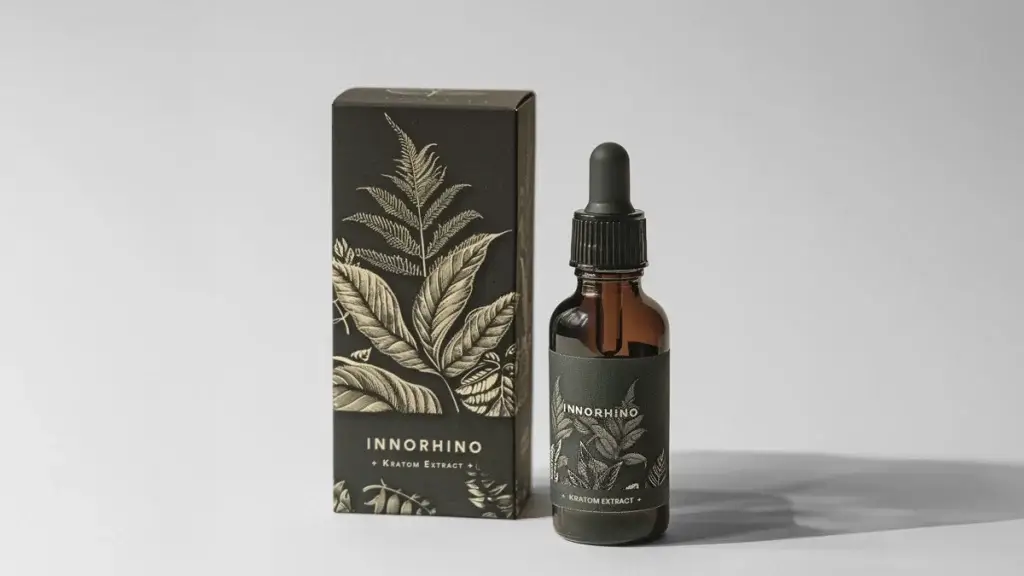
Liquid extracts are concentrated and sensitive to light, so amber or opaque glass is the usual choice. The critical spec is the fit between the bottle neck, dropper, and cap. A small mismatch causes leaks in transit, and a leaking bottle can ruin its carton and the products around it.
If a child-resistant closure is required, select it together with the bottle, not after. Child-resistant dropper caps come in specific neck finishes, and switching bottles later can mean revalidating the whole closure. Glass also adds weight and breakage risk, so plan protective inserts or dividers if you ship direct to consumers.
Tea and edibles
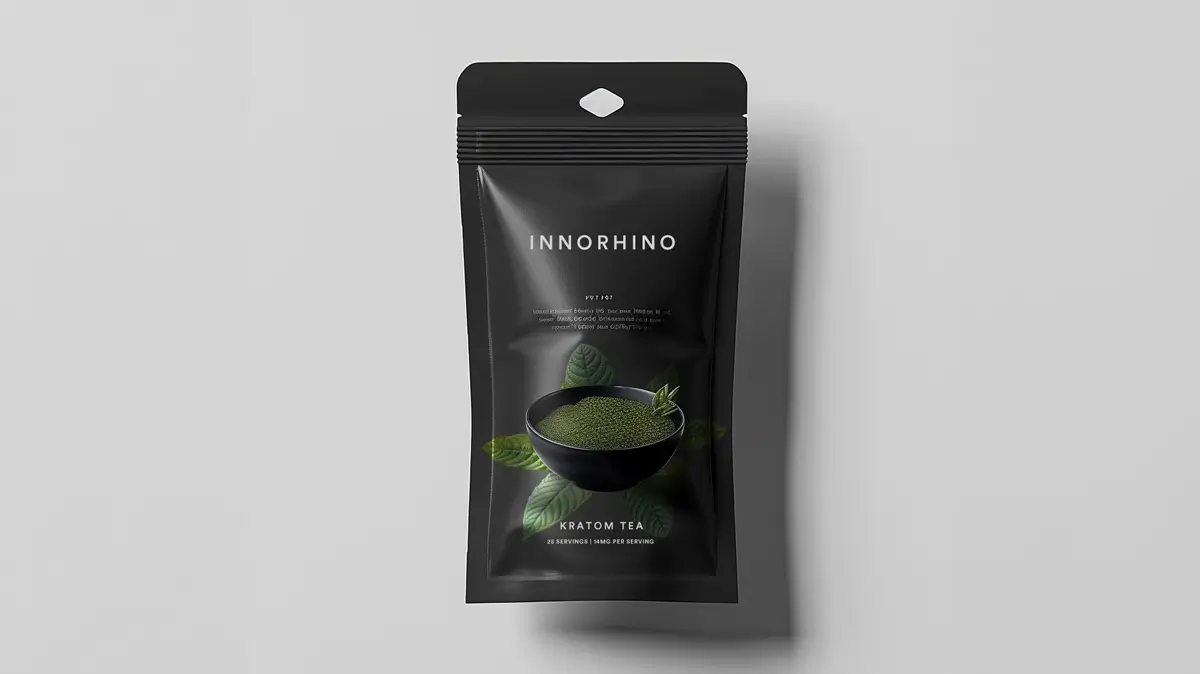
Kratom tea usually combines individual tea bags with an outer pouch or carton. The tea bag material matters less for shelf life than the outer barrier, which carries most of the moisture protection.
Edibles bring food-packaging requirements into play. Wraps and inner packaging should use food-contact materials, and some states and retailers expect child-resistant or tamper-evident packaging for ingestible products. Confirm these requirements early, because they can decide whether you need a pouch, a carton with a locking feature, or a rigid container.
Plan compliance features before artwork
Kratom rules in the US are set mostly at the state level and change often. A number of states have passed versions of a Kratom Consumer Protection Act, and these laws commonly cover age limits, product standards, and labeling. Some state proposals would also require labels to list alkaloid content, such as mitragynine and 7-hydroxymitragynine (7-OH). At the federal level, DEA has moved in 2026 to schedule certain kratom-derived compounds, and the status of 7-OH may keep changing.
You don’t need to resolve every legal question in the packaging brief. You do need to know three things before artwork starts:
- Which states and channels you will sell into. Requirements and retailer policies differ, and the strictest market you plan to enter usually sets the spec.
- How much label content you must carry. Ingredient and alkaloid disclosures, warnings, batch or lot codes, and manufacturer details take panel space. If you discover this late, the fix may be a larger bag or a new carton, not just a smaller font.
- Whether you need child-resistant or tamper-evident features. These affect closures, zippers, and sometimes the whole structure, so they belong in the first spec, not the final review.

Confirm the current rules with legal counsel for each market, and check federal notices before relying on product claims or label content. Our kratom packaging overview summarizes how regulation differs by region.
From spec to sample: what to validate
A packaging spec is only a hypothesis until it survives real conditions. Before mass production, test samples against the risks that matter for your product and channel:
- Barrier and storage. Fill sample pouches or bottles with your actual product and store them under warm, humid conditions similar to your supply chain. Check for clumping, softening, or odor changes over the storage period you expect.
- Seals and closures. Open and close zippers and caps repeatedly. For liquids, check for leaks after shipping-style handling.
- Transit. If you ship glass or ship direct to consumers, run drop and vibration tests on the full shipping configuration.
- Child resistance, where required. Child-resistant packaging is tested on the finished package and closure, not on the material alone. US testing follows the protocol in 16 CFR 1700.20, carried out by an independent laboratory.
- Label proof. Check the printed proof against each target state’s requirements before you approve the full run.
INNORHINO arranges packaging tests through third-party laboratories, and lab fees are quoted separately from production. Building these tests into the sampling schedule usually costs less time than discovering a failure after launch.
Talk with us. Let’s shape it together.
If you are choosing or reworking packaging for a kratom line, the most useful starting point is a short brief: the product form, fill weight or count, the states and channels you plan to sell into, target quantities, and your launch timing. With that, we can recommend a format, flag the compliance features to plan for, and map out sampling and testing.