How much of your packaging should change for Valentine’s Day, and when do you need to start?
Change only as much as your sell-through window can absorb. A sleeve, sticker, or ribbon over your existing box carries the least risk and the shortest timeline. A new printed box suits a dedicated gift SKU with a known forecast. A new structure, such as a heart-shaped rigid box, pays off only when the box is part of what you sell and you can use it after February 14.
This applies to brands adding a seasonal edition to an existing line. The trade-off is signal versus exposure: the more the package changes, the stronger it reads on shelf, and the more stock you hold if the season undersells, because MOQ is set per SKU. Plan backward from your in-warehouse date, allow for the Lunar New Year factory closure, and approve a physical sample before mass production.
Valentine’s packaging has a short life. It needs to be in your warehouse weeks before February 14, it has to sell in a few weeks, and anything left on February 15 is hard to move at full price. That makes the first decision a commercial one: how far should the packaging change, given what you expect to sell and how much time you have?
Color, finish, and unboxing still matter. They just come after you decide the scope.
Start with what happens to unsold stock
Before anyone opens a design file, answer three questions. Does the product sell year-round, or only as a gift? How much of the Valentine’s forecast is a confident number, and how much is hope? And if 20 percent of the boxes are left over, can they be sold, repacked, or written off without hurting the margin on the whole run?
A product that sells all year can carry a light seasonal layer and go back to its standard box in March. A product that exists only as a gift, such as a flower box or a chocolate assortment, can justify a dedicated design because the packaging is part of the purchase. Most brands sit between the two, which is why the choice usually comes down to three levels of change.
Choose how far the packaging changes
| Level of change | What changes | Fits best when | What it costs you |
|---|---|---|---|
| 1. Seasonal layer | A sleeve, belly band, sticker label, ribbon, or insert card over your existing box | The product sells year-round and the forecast is uncertain | A weaker shelf signal, a hand-assembly step, and the add-on must fit your current box dimensions |
| 2. Seasonal print | Same structure and dieline, new artwork and finishes | You run a dedicated gift SKU with a reliable forecast | A separate SKU with its own MOQ, a new proof round, and leftover stock that carries the season’s look |
| 3. New structure | A new box form, such as a heart-shaped rigid box, a magnetic closure, or a gift set with a custom insert | The box is part of what the customer buys, and you can reuse the structure for other occasions | New sampling, the longest timeline, a higher unit cost, and more freight volume per unit |
Level 1 is the right default for most brands testing a Valentine’s edition. Because the base box stays the same, the leftover risk is limited to the sleeve or label, and the standard box keeps selling after the season. The limit is visibility: a sticker on a familiar box rarely stops anyone in an aisle.
Level 2 gives a much stronger signal without new tooling. The catch is inventory. A seasonal print is its own SKU, and since MOQ applies per SKU, the quantity you commit to is set by the production minimum, not by your most cautious forecast.
Level 3 makes sense when the structure is the product. Rigid boxes generally ship assembled, so a new rigid structure takes more space in the carton and on the pallet than a folding carton, and a heart shape packs less efficiently than a rectangle. Those costs are easier to justify when the same structure can return for Mother’s Day, anniversaries, or a year-round gift line.
Example: a heart-shaped box built for reuse
The heart-shaped telescopic rigid box below has a separate lid and base and is used for flowers, chocolates, and Valentine’s gifts. The shape does the seasonal work, so the print can stay restrained. A neutral or metallic wrap lets the same structure carry an anniversary or Mother’s Day edition, which spreads the sampling cost across more than one season.


Signal the occasion without locking in the stock
Deep red, pink, and hearts say Valentine’s instantly, and they also expire on February 15. Pastels, metallics, and warm neutrals still read as gift-worthy but can sell into the spring. If leftover stock worries you, put the explicit Valentine’s cues on the layer you can remove (the sleeve, the ribbon, the insert card) and keep the box itself in a palette that lasts longer.
Typography follows the same logic. A refined serif suggests a premium gift, and a script adds warmth, but script faces lose legibility at small sizes, so keep them for the headline and leave ingredients, claims, and regulatory text in a clear face.
Finishes are where the premium feel comes from and where the schedule can slip. Foil stamping, embossing, debossing, spot UV, and soft-touch lamination each add a process step, and their combination behaves differently on each board and coating. Check the finish on a physical sample with your actual board and lamination before you approve the run.
Example: a chocolate box where the insert sets the layout
Premium chocolate brands lean on foil, embossing, and a structured lid-and-base box because the opening moment is part of what the buyer is paying for. In a box like the one below, the plastic divider decides how many pieces fit and how they sit, so the piece count and divider layout need to be fixed before the artwork. Changing the assortment late means changing the insert, and that reopens sampling.


Design the unboxing for the person giving the gift
Valentine’s packaging is bought by one person and opened by another. The buyer wants to look thoughtful without wrapping anything; the recipient remembers the opening. Details that serve both include a magnetic closure that feels considered, a short message printed inside the lid, and a blank card the buyer can write on. This is also why a gift box can lift average order value: the packaging does the wrapping for the buyer.
Each detail has a production consequence. Printing inside the lid adds a print pass. A magnetic closure usually means a rigid structure. An insert card, on the other hand, can change every season without touching the box, which makes it the most flexible way to personalize a standard package.
Example: a perfume gift edition
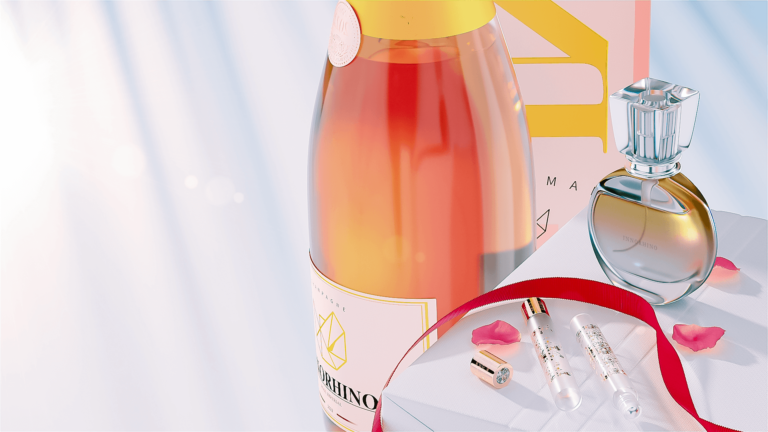
Consider a perfume brand adding a Valentine’s edition. The bottle stays the same; the carton gets a seasonal print, a metallic foil accent, and an insert card with space for a note. The insert that holds the glass bottle is the part to protect: if the edition adds a second item, such as a rollerball or a candle, the insert has to be redesigned and drop-tested again, and the project moves from Level 2 to Level 3.


Make the sustainable choice specific
Seasonal packaging is thrown away quickly, which is exactly why buyers notice when it isn’t. The most practical moves are structural. Keep the package paper-based where you can, and replace plastic windows or PVC trays with paper or molded pulp inserts so the box is easier to recycle. Design a box sturdy and attractive enough to keep, so it has a second life as storage.
Be precise about claims. FSC certification covers responsible sourcing of the paper, not recyclability, so confirm your supplier’s chain-of-custody certificate before printing the logo. “Compostable” needs certification for the market you sell in, and in the US any environmental claim on the box should hold up under the FTC Green Guides.
Work backward from your in-warehouse date
The date that matters is when finished goods must be in your warehouse or at the retailer, not February 14. Count back from there: freight, then production and inspection, then sample approval, then structure and artwork. Sea freight from Asia to the US commonly takes one to two months, and the earlier stages depend on the level of change, so ask your supplier for an estimate at each stage rather than a single lead time. The same method applies to planning other seasonal packaging backward from an in-store date.
Valentine’s production has one extra constraint. Lunar New Year falls between late January and mid-February, and many factories in China slow down weeks before the holiday and take time to return to full capacity after it. In 2027 it falls on February 6, eight days before Valentine’s Day, so Valentine’s packaging produced in China needs to be finished and shipped before the closure. Ask your supplier for their last production date and their last dispatch date early in the fall.
If you start late, the scope is what gives. A Level 1 sleeve or label is the realistic option when the calendar is tight, and air freight can recover some time at a higher cost per unit. A new structure started late is the project most likely to miss the season.
Whatever the level, approve a physical sample with the real product inside before mass production. It is the one step that catches a sleeve that doesn’t slide, a finish that cracks on the fold, or an insert that lets the bottle rattle.
Planning a Valentine’s edition?
Send us your product dimensions, your target quantity, the date it needs to be in your warehouse, and whether you are starting from an existing box. We will tell you which level of change fits your timeline and what each option means for the budget. Talk with us. Let’s shape it together.
FAQs About Valentine Packaging Design
Start from the date the goods must be in your warehouse and count back through freight, production, sampling, and design. Sea freight from Asia to the US commonly takes one to two months. If you produce in China, the Lunar New Year closure usually falls just before Valentine’s Day, so production needs to finish before the factory shuts down.
Only if you have a reliable forecast for it. A seasonal print is its own SKU, and MOQ applies per SKU, so the minimum run sets your commitment. If the forecast is uncertain, a sleeve, label, or ribbon over your standard box limits the leftover risk to the add-on.
Red, pink, and gold signal the occasion immediately but date the stock after February 14. Pastels, metallics, and warm neutrals still read as gifts and can sell into spring. Many brands put the explicit Valentine’s cues on a removable sleeve or ribbon and keep the box in a longer-lasting palette.
Keep the package paper-based, replace plastic windows and PVC trays with paper or molded pulp inserts, and design a box worth keeping. Back every environmental claim: FSC covers sourcing, not recyclability, and compostable claims need certification for your market.